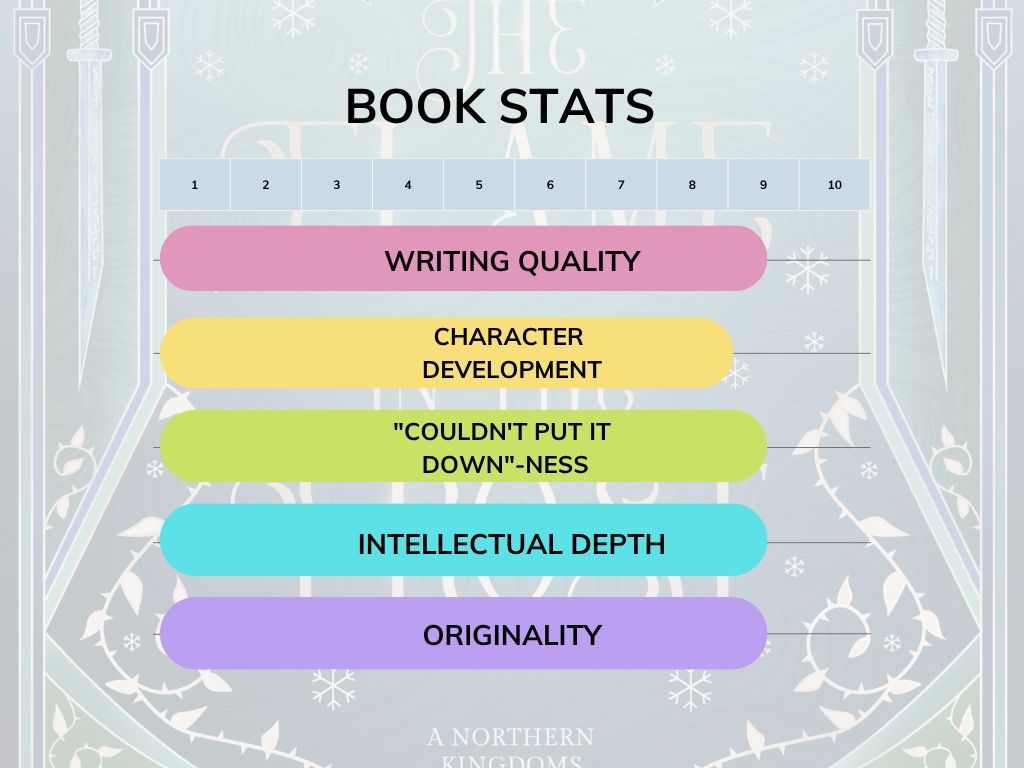
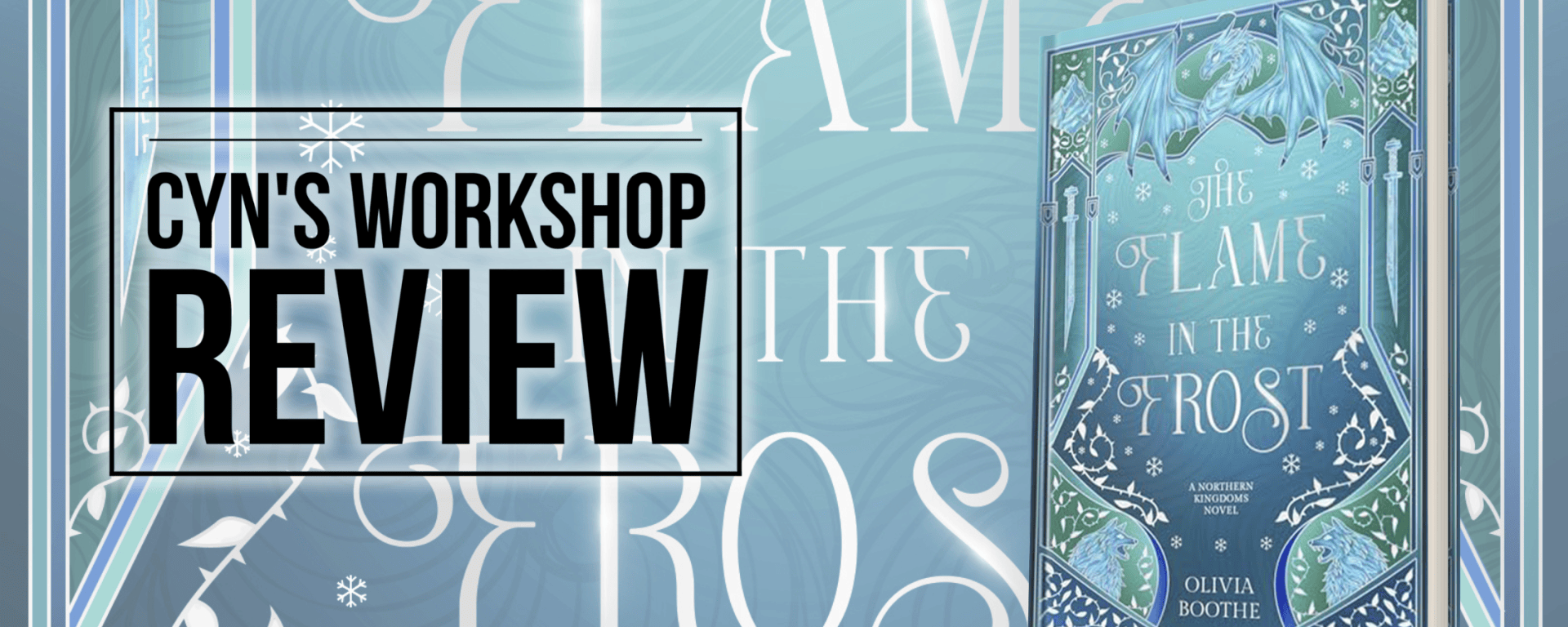
The Flame in the Frost delivers a captivating Jack Frost retelling with rich mythology, fantastic worldbuilding, and a beautifully developed slow-burn romance, even if a few overused romantasy tropes hold it back.
I love a good fairy tale retelling, especially when an author takes a familiar character and creates something entirely new. So when I was gifted an ARC of The Flame in the Frost through an opportunity with Random House, Rattle the Stars, and the author, I was immediately intrigued by the idea of another Jack Frost retelling. I’ve had some fantastic experiences with stories inspired by Jack Frost, but I’ve also encountered a few that didn’t quite work for me, so I went into this one with cautious optimism.
Thankfully, The Flame in the Frost turned out to be an incredibly enjoyable reading experience. Between its fascinating blend of Norse mythology, fae courts, and Jack Frost lore, the novel creates a world that feels both familiar and refreshingly different. Add in a childhood friends-to-lovers romance filled with delicious slow-burn tension, and I found myself completely invested in the story.
Now, I did have a couple of issues with some of the romantic tropes, particularly the use of fated mates, but those frustrations didn’t take away from how much I enjoyed the novel overall. The pacing was excellent, the character dynamics were engaging, and the ending left me desperately wanting the sequel.
A Jack Frost Retelling with a Mythological Twist
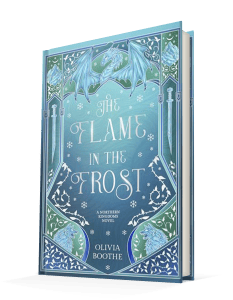
One of the things I appreciated most about The Flame in the Frost was how the author approached the mythology. Rather than simply retelling the familiar story of Jack Frost, Booth incorporates elements of Norse mythology and fae folklore to create something considerably more expansive.
We have the Seelie Court, the Unseelie Court, and other fae who exist outside those established hierarchies. But then we also have Jack Frost and his own court, which operates separately from those traditional fae divisions. I thought that was a fascinating choice because it allows the author to explore familiar supernatural concepts while establishing a distinct identity for Jack and his people.
What makes the worldbuilding especially interesting is how these different mythological influences work together. On paper, combining Jack Frost, Norse mythology, and multiple fae courts might sound like a lot to manage, but the author brings those elements together in a way that feels surprisingly cohesive.
I never felt like I was reading another generic fae fantasy or another straightforward Jack Frost retelling. Instead, the story offered something different, and that originality became one of my favorite aspects of the novel.
The Worldbuilding Was One of My Favorite Elements
Fantasy worldbuilding can make or break a novel for me, especially when an author is drawing inspiration from multiple mythological traditions. I want the world to feel immersive, but I also want the different elements to make sense together rather than feeling like a collection of unrelated ideas.
Thankfully, The Flame in the Frost delivers an intriguing setting with its own magical structure and political divisions. The different fae courts create a sense of hierarchy, while Jack’s position within his own court adds another layer to the supernatural world.
I particularly enjoyed that the author didn’t simply rely on the familiar Seelie and Unseelie conflict to carry the story. Those courts are important, but they’re only part of a larger magical landscape that includes different types of fae and mythological influences.
There’s a lot happening within this world, and I think that’s part of what makes it so engaging. The mythology feels expansive enough to support a larger story, and I appreciated how the author used those elements to create an atmosphere that was both magical and politically complicated.
Jack and Sylvie: Childhood Friends with Complicated Feelings
At the heart of the novel are Jack and Sylvie, two characters whose relationship begins long before the events of the main story.
Sylvie is the daughter of a guardsman, and her friendship with Jack begins when she follows a will-o’-the-wisp and stumbles upon him while he’s struggling with his ice magic. That encounter becomes the foundation of a relationship that develops throughout their childhood, eventually growing into something much more complicated.
I absolutely loved that history between them because it gives their romantic relationship an emotional foundation. They aren’t strangers who suddenly become obsessed with each other, nor are they two people whose attraction exists without any meaningful connection.
They already know each other. They’ve shared experiences, developed a friendship, and formed a bond that continues influencing their relationship as adults.
And that’s exactly the kind of romantic development I enjoy reading.
A Prince, a Captain, and an Impossible Romance
Of course, things become considerably more complicated as Jack and Sylvie grow older.
Sylvie eventually becomes captain of the guard, while Jack assumes his responsibilities as a prince. Their positions already create certain expectations, but matters become even more difficult when Jack is betrothed to the princess of the Unseelie Court.
Naturally, that creates some fantastic romantic tension.
Jack and Sylvie clearly have feelings for each other, but their responsibilities and circumstances make acting on those feelings incredibly complicated. Their relationship is shaped by years of friendship, unspoken emotions, and the reality that their lives are no longer as simple as they were when they were children.
I thought the author handled that tension incredibly well because their conflict feels rooted in the world and their individual circumstances. The obstacles separating them aren’t simply misunderstandings thrown into the story to delay the romance.
There are genuine reasons why being together isn’t straightforward, and those complications make their relationship considerably more compelling.
The Slow-Burn Romance Was Deliciously Frustrating
I love a good slow-burn romance when it’s executed properly, and The Flame in the Frost definitely delivers on that front.
The tension between Jack and Sylvie is palpable throughout the novel, particularly because they already share such a strong emotional connection. Their feelings aren’t entirely new, but acknowledging those feelings and actually doing something about them are two very different things.
And let me tell you, there were moments when I wanted to grab both characters by the shoulders and tell them to just kiss already.
Seriously. Just get together!
But that’s also part of what makes a well-written slow burn so satisfying. I enjoy being frustrated by romantic tension when that frustration comes from genuine emotional investment rather than unnecessary drama.
The longer Jack and Sylvie struggle with their feelings, the more invested I become in seeing them finally acknowledge what they mean to each other. And when those romantic developments finally happen, they feel considerably more rewarding because of everything that came before.
I Could Have Done with Less Romantic Tug-of-War
As much as I enjoyed the slow burn, I do think the novel occasionally leaned a little too heavily into the romantic back-and-forth.
Jack and Sylvie share several moments where they acknowledge their feelings or become physically affectionate, only for circumstances to interrupt their progress. While those scenes certainly contribute to the tension, I sometimes wished the author had saved more of that emotional payoff for one particularly significant moment.
I think concentrating those romantic developments into a single major scene could have made the eventual payoff even more powerful. There were times when I felt like the characters were getting close to resolving their feelings, only for another interruption to push everything backward again.
That said, I still thought those moments were well executed. They kept me invested in the relationship, and I genuinely enjoyed how frustrated I became whenever something prevented Jack and Sylvie from finally being together.
So while I might have preferred a slightly different approach to the romantic progression, I can’t deny that the tension worked.
Can We Please Retire the Fated Mates Trope?
Now, here’s where I have to complain a little.
I’m getting really tired of the fated mates trope.
I understand why it’s popular, especially in fae romantasy, but I feel like it’s become such an overused element of the genre. It seems like every other fae romance needs to establish that two characters are magically destined to be together, and personally, I don’t think every romantic relationship needs that additional justification.
Sometimes characters can simply fall in love.
And that’s perfectly fine.
My frustration with the trope was especially noticeable in The Flame in the Frost because Jack and Sylvie already have such a wonderful history together. Their childhood friendship, shared experiences, and growing emotional connection provide more than enough reason for readers to become invested in their romance.
They don’t need a magical bond telling them they’re destined for each other because the story has already established why they matter to one another.
Their Friendship Was Stronger Than the Fated Mates Trope
I think the reason the fated mates element bothered me so much was that it felt unnecessary when the relationship itself was already so well developed.
Jack and Sylvie have known each other since childhood, and their bond has evolved naturally over time. They’ve supported one another, shared meaningful experiences, and developed feelings that make sense within the context of their history.
That’s the kind of relationship development I want to see in fantasy romance because it allows the characters to choose one another rather than suggesting their connection was predetermined.
When a story introduces a fated mates bond, I sometimes feel like it diminishes the importance of that choice. Suddenly, the romance isn’t simply about two people falling in love because of their personalities and experiences; it’s also about a supernatural force declaring that they belong together.
Now, I know plenty of readers absolutely love this trope, and that’s perfectly fine. It’s simply become one of my personal pet peeves, particularly when the author has already done such a wonderful job developing the relationship organically.
Thankfully, the trope didn’t ruin the romance for me. Jack and Sylvie’s friendship remained an important part of their dynamic, and I appreciated that the story never completely abandoned that foundation.
Dual POV Makes the Romance Even Better
Another aspect of the novel I appreciated was the dual perspective between Jack and Sylvie.
I love dual POV when it allows readers to understand both characters’ motivations, particularly in a romance where so much of the conflict revolves around complicated feelings and responsibilities.
With Jack and Sylvie, we get to experience their relationship from both sides, which adds emotional depth to the tension between them. Their shared history means they’re often dealing with similar feelings, but their individual circumstances influence how they approach those emotions.
Jack has his responsibilities as a prince and his betrothal to the Unseelie princess, while Sylvie must navigate her position as captain of the guard and the expectations that come with it.
Being able to understand both perspectives makes their relationship feel more balanced. Neither character exists simply to support the other’s emotional journey, and I appreciated that the author gave them distinct roles within the story.
It also made the slow burn considerably more entertaining because I could understand why they were struggling even when I desperately wanted them to stop making things so complicated.
Romantasy Isn’t Usually My First Choice
Something worth mentioning is that The Flame in the Frost is very much a romantasy.
The romance plays a significant role in the overall story, and Jack and Sylvie’s relationship is central to much of the narrative. That’s not necessarily a bad thing, but it’s something I think readers should know going into the novel.
Personally, I tend to gravitate toward epic fantasy, science fiction, and young adult fantasy rather than books where romance is the primary focus. I enjoy romantic relationships in my fantasy novels, but I usually prefer a larger plot unfolding alongside them.
Give me Dragonlance, complicated mythology, political conflicts, and an expansive fantasy world, and I’m happy.
That doesn’t mean I dislike romantasy. I just tend to be more selective about it because I want the romance to complement a compelling story rather than replace one.
What impressed me about The Flame in the Frost was that I became genuinely invested in the romance despite it being such a central element. The worldbuilding and mythology provided enough substance to keep me engaged, while Jack and Sylvie’s history made their relationship emotionally satisfying.
For someone who doesn’t typically seek out romance-heavy fantasy, that’s a pretty significant compliment.
Excellent Pacing and Addictive Storytelling
One of the reasons I enjoyed The Flame in the Frost so much was its pacing.
The story moves confidently between worldbuilding, character development, romantic tension, and the larger conflicts surrounding the different fae courts. I never felt like the author was sacrificing the fantasy elements simply to focus on the romance, even though the relationship between Jack and Sylvie remained central to the narrative.
I also appreciated how the characters’ shared history was incorporated into the story. Rather than treating their childhood friendship as a convenient explanation for their attraction, the author continues developing that connection throughout the novel.
The pacing allows readers to become invested in their relationship while still exploring the mythology and magical structure of the world.
And honestly, I had a difficult time putting this book down.
Even when I found myself frustrated by certain romantic tropes, I was still completely invested in what would happen next. That’s always a good sign because it means the storytelling is doing something right.
That Ending Has Me Needing Book Two
And then we get to the ending.
Well, that was certainly something.
I enjoyed the plot twist, and I thought it created an intriguing direction for the next installment. At the same time, I have slightly mixed feelings about it because the revelation involves another trope I’ve been seeing increasingly often in fantasy romance.
I’m not going to explain exactly what happens because I don’t want to spoil the ending, but it’s one of those developments that made me appreciate the storytelling while simultaneously wishing the genre would explore some different ideas.
Much like the fated mates trope, it’s not necessarily something that ruins a book for me. I’m simply becoming a little tired of encountering the same romantic devices across so many different stories.
Still, the twist was effective enough to leave me eager for the sequel. I want to know how these developments will affect Jack and Sylvie, particularly after everything they’ve experienced throughout the novel.
So yes, despite my complaints, I absolutely need book two.
A Pleasant Surprise Outside My Comfort Zone
One of the reasons I enjoy receiving ARCs and participating in review opportunities is that they occasionally introduce me to books I wouldn’t necessarily choose for myself.
The Flame in the Frost is a perfect example.
While the Jack Frost retelling immediately caught my attention, the romance-heavy premise wasn’t something I would normally gravitate toward. But I’m incredibly glad I gave it a chance because I ended up discovering a story that I genuinely enjoyed.
In fact, I enjoyed it enough that I immediately recommended it to a friend because I thought it would be right up her alley.
That’s always one of my favorite parts of being a book reviewer. Sometimes a novel surprises me so much that I immediately start thinking about the people in my life who would love it just as much.
And this was definitely one of those books.
Final Thoughts
The Flame in the Frost was a captivating Jack Frost retelling that successfully blended Norse mythology, fae folklore, and an emotionally engaging childhood friends-to-lovers romance.
I absolutely loved the worldbuilding, particularly how the author incorporated the Seelie and Unseelie courts alongside Jack Frost’s own magical court. The different mythological influences worked surprisingly well together, creating a fantasy world that felt fresh rather than simply recycling familiar fae concepts.
Jack and Sylvie were equally compelling characters, and their shared history made their romance especially satisfying. I loved the slow-burn tension, the dual perspectives, and the way their friendship continued to shape their relationship as their feelings developed.
My biggest issue was the reliance on familiar romantasy tropes, particularly the fated mates element. I genuinely believe Jack and Sylvie’s relationship was strong enough without needing a magical bond to establish their connection, and I would have preferred a little less romantic back-and-forth before their eventual emotional payoff.
I also had mixed feelings about the final plot twist because it introduced another trope that I’ve encountered quite frequently in fantasy romance. However, I still thought the ending was effective, and it certainly left me wanting to continue the series.
Ultimately, I thoroughly enjoyed this novel. The pacing was excellent, the worldbuilding was captivating, and the romantic tension was strong enough to keep even this epic fantasy reader completely invested.