Leviathan Wakes masterfully combines expansive science fiction, noir mystery, political intrigue, and unsettling horror in an addictive opening to The Expanse series.
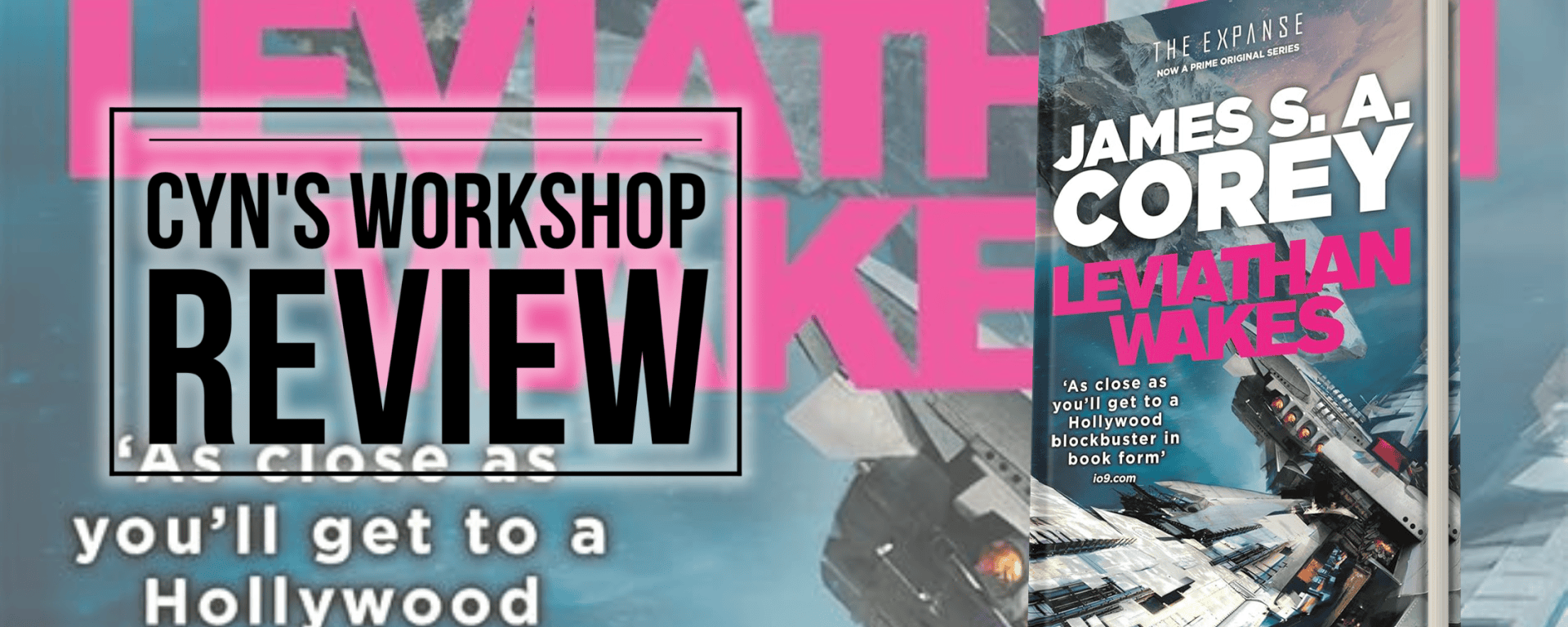
I am ridiculously late to Leviathan Wakes by James S. A. Corey. This book has been sitting on my TBR for ages, especially after I watched and loved the first season of The Expanse. Somehow, though, I never actually got around to reading the novel until it became a pick for the sci-fi and fantasy book club I host at Barnes & Noble.
And wow, was I missing out.
Leviathan Wakes is phenomenal. It blends expansive science fiction, political intrigue, noir mystery, and just enough cosmic horror to create something that feels incredibly immersive without becoming overwhelming. Yes, the beginning is slow, but it is slow with purpose, carefully building a universe that becomes increasingly impossible to leave behind.
A Slow Beginning with a Purpose

One thing nearly everyone in my book club agreed on was that the beginning is slow.
But none of us necessarily considered that a bad thing.
There is a huge difference between a story that is slow because nothing is happening and a story that deliberately takes its time establishing its world. Leviathan Wakes falls firmly into the latter category.
James S. A. Corey uses those opening chapters to establish the political landscape, the differences between Earth, Mars, and the Belt, and the tensions that have developed between these communities. Instead of dumping pages of exposition on the reader, that information is revealed organically through the characters and their experiences.
You are learning about this universe while simultaneously realizing that something is very, very wrong.
That underlying sense of unease kept me invested even when the pacing was slower.
Miller Brings the Noir
Of the two perspectives, Miller’s opening storyline immediately grabbed me.
His chapters have such a strong noir atmosphere that I could practically imagine them playing out in black and white.
Miller is the beaten-down detective who has seen better days. His marriage is over, he drinks too much, and instead of receiving the important cases he once handled, he’s now being handed assignments no one particularly cares about.
Then he’s told to find Julie Mao.
What begins as a relatively simple missing-person assignment slowly becomes an obsession as Miller realizes that Julie’s disappearance connects to something much larger.
I loved the entire aesthetic of his storyline. The cynical detective, the increasingly dangerous investigation, the missing woman no one else seems willing to keep searching for—it gives the novel this wonderful noir mystery buried inside a massive space opera.
Remember the Cant
Then there’s Holden.
The destruction of the Canterbury immediately raises the stakes for his side of the story. Holden and the surviving members of his crew are suddenly thrust into a political conflict much larger than themselves, and every decision they make has potentially catastrophic consequences.
Holden also becomes such an interesting contrast to Miller.
He’s incredibly idealistic. He believes information should be shared. He believes people deserve the truth. He wants to believe there is a right way to handle impossible situations.
Miller?
Not so much.
That ideological difference becomes incredibly important once their storylines finally collide.
When Holden and Miller Meet, Everything Changes
For me, the moment Leviathan Wakes really takes off is when Holden and Miller finally meet.
That’s when the slow-building story turns into a snowball rolling downhill.
And suddenly it is moving fast.
Their personalities immediately clash. Miller is pragmatic to the point of being ruthless, while Holden is constantly horrified by how easily Miller is willing to make permanent decisions.
Watching those two characters challenge one another was one of my favorite aspects of the novel.
Their conflict also raises some genuinely interesting moral questions.
When does survival justify violence?
Who gets to decide whether someone deserves to die?
And when the stakes involve potentially millions of lives, does morality change?
The novel never gives readers simplistic answers, which makes those conflicts far more compelling.
The Belters Make the World Feel Alive
Another element I absolutely loved was Belter Creole.
At first glance, some of the dialogue looks almost incomprehensible, but somehow I could still understand what was being communicated through context.
That is incredibly effective worldbuilding.
The language feels like something that could naturally develop among generations of people living in space, particularly within communities made up of individuals whose ancestors came from different cultures and spoke different languages.
Rather than slowing the story down by constantly translating everything, Corey trusts the reader to understand through context.
And it works.
Those linguistic differences also reinforce that Belters aren’t simply humans who happen to live somewhere else. They have developed their own culture, identity, language, and relationship with the rest of humanity.
Sci-Fi with a Delicious Touch of Horror
I was also not prepared for how much horror exists in this book.
And naturally, I loved it.
There are moments where Leviathan Wakes stops feeling like traditional space opera and starts giving Dead Space energy.
We’re talking horrifying biological transformations, grotesque imagery, and bodies doing things bodies absolutely should not be doing.
At one point, you’ve basically got a rib cage moving around with intestines hanging from it.
Wonderful.
What makes the horror work is that it never overtakes the science-fiction story. It exists alongside the political intrigue, mystery, and space exploration, adding an unsettling layer to everything happening with the protomolecule.
The horror makes the unknown feel genuinely dangerous.
Character Dynamics Give the Story Heart
For all the political maneuvering and horrifying alien biology, Leviathan Wakes remains incredibly character driven.
I loved Holden’s relationship with Naomi, especially because she refuses to simply agree with him. She challenges him when necessary, calls him out when he’s being ridiculous, and provides a much-needed counterbalance to his idealism.
Fred Johnson was another character I found incredibly interesting, particularly because almost everyone in this world seems to exist somewhere in a moral gray area.
Even the conflict between Holden and Miller becomes more complicated as the novel progresses.
The moment Miller kills Dresden is probably one of the clearest examples.
Holden is furious because Miller has once again decided he can act as judge, jury, and executioner. And Holden isn’t wrong.
But Naomi also acknowledges that, in that particular moment, Miller may have made the necessary choice.
Both perspectives can exist simultaneously.
That complexity makes these characters feel incredibly human.
A Story That Becomes Impossible to Put Down
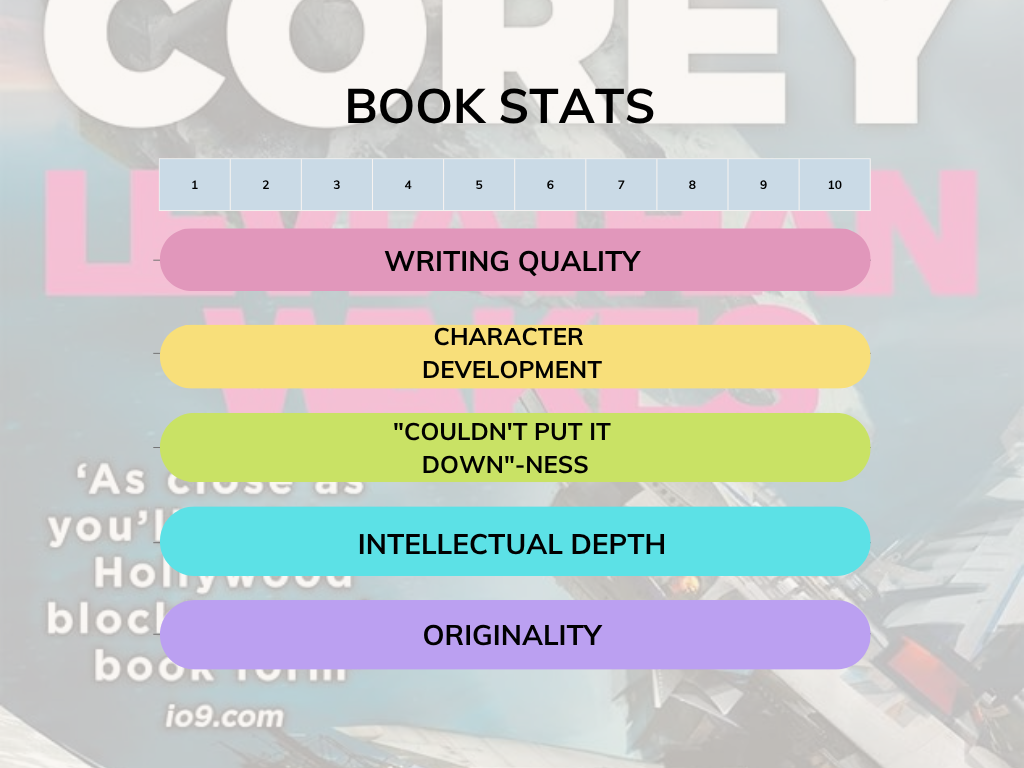
Once Leviathan Wakes gains momentum, I couldn’t put it down.
I ended up switching between the physical book and audiobook because whenever I had to stop physically reading, I still wanted to continue the story.
By the final quarter, I was completely consumed.
The political intrigue, the mystery surrounding Julie Mao, the conflict between Earth, Mars, and the Belt, the protomolecule, and the increasingly horrifying revelations all come together beautifully.
What impressed me most was that despite everything happening, the story never became difficult to follow.
There are multiple factions, locations, mysteries, and competing interests, but the narrative remains cohesive throughout.
Worldbuilding Without the Info Dump
This is exactly how I like expansive science-fiction worldbuilding to be handled.
Corey doesn’t stop the story to explain the entire history of humanity in space.
Instead, we’re gradually shown how humans reached this point.
We learn about the Belt because we’re spending time with Belters. We understand political tensions because Holden and Miller are caught directly in the middle of them. We understand the economic and cultural divisions because those differences affect the characters’ everyday lives.
The worldbuilding serves the story rather than interrupting it.
That slower opening is therefore doing a tremendous amount of work.
By the time the plot explodes into motion, readers already understand why everything happening matters.
Final Thoughts
Leviathan Wakes absolutely lived up to the hype.
Yes, the opening is slower, but it is deliberately establishing an enormous universe, its cultures, its political conflicts, and the people who inhabit it. That foundation allows the second half of the novel to move with incredible momentum without sacrificing clarity.
I loved the noir influence of Miller’s storyline. I loved Holden’s idealism and the way other characters challenge it. I loved the Belter language, the political intrigue, the character dynamics, and especially those unexpected bursts of cosmic horror.
Most importantly, I completely lost myself in this book.
I’m only annoyed that it took me this long to finally read it.
Now I absolutely need to continue The Expanse because there is no way I’m stopping here.