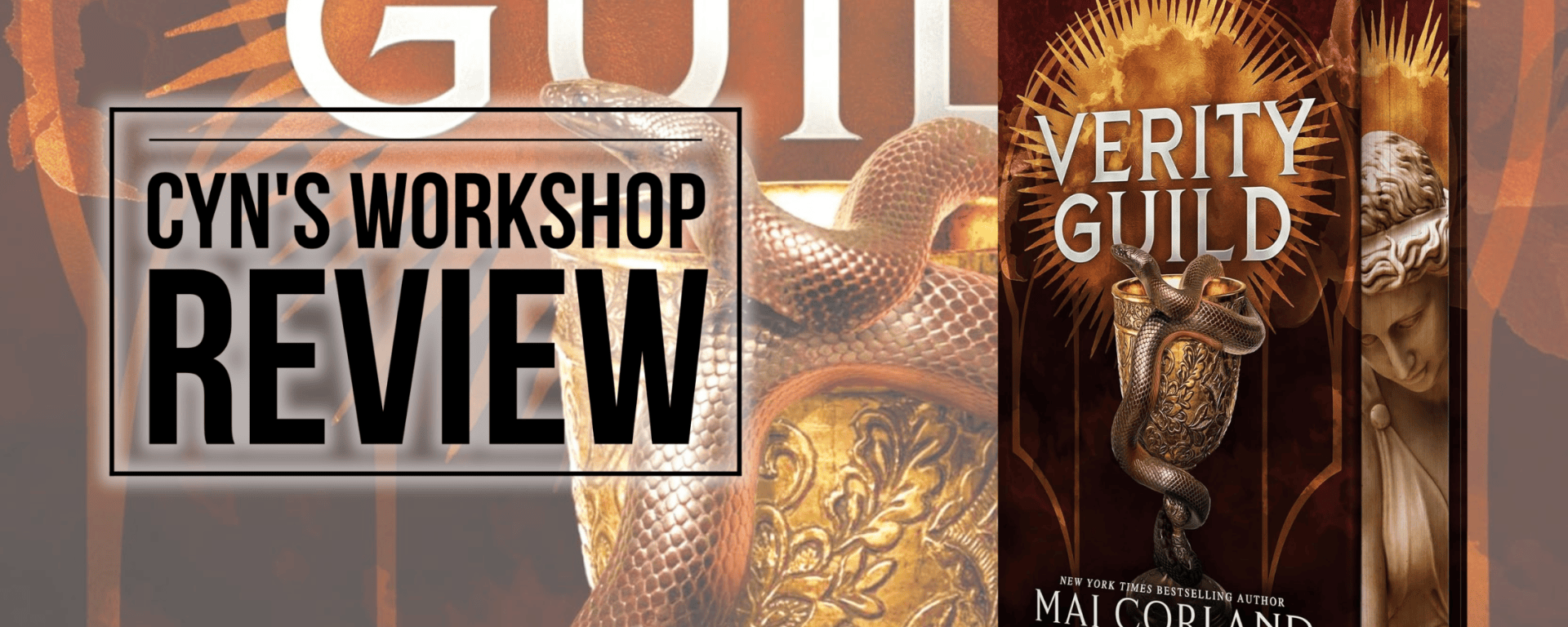
Verity Guild delivers an addictive blend of Roman-inspired fantasy, deadly secrets, locked-room mystery, and enemies-to-lovers romance, proving once again that Mai Corland knows how to write compelling characters.
After reading Mai Corland’s The Broken Blades trilogy, I was incredibly curious to see what she would do next. I genuinely enjoyed that series, and I thought her storytelling became stronger with each installment. By the time I reached the third book, I was completely blown away by some of the revelations. Seriously, I did not see those twists coming.
So naturally, when I received an ARC of Verity Guild from Red Tower Books, I was interested. Admittedly, I was also a little hesitant because Red Tower releases can be hit or miss for me. A lot of their books lean heavily into romantasy, and while I enjoy romance in my fantasy, I don’t necessarily need romance to drive the entire plot.
Thankfully, Verity Guild ended up being a pleasant surprise. With its Roman-inspired setting, mysterious murders, dangerous secrets, and fantastic enemies-to-lovers tension, Corland delivered an atmospheric fantasy that kept me invested from beginning to end.
A More Mature Side of Mai Corland

One of the first things I noticed about Verity Guild was the shift in tone compared to Five Broken Blades and the rest of The Broken Blades trilogy.
I remember hearing criticism that the earlier trilogy’s writing felt somewhat young, particularly for readers expecting a more mature fantasy. Personally, I didn’t have an issue with that. I thought the accessible writing style made the books easy to get into, and I appreciated how quickly Corland could pull me into her stories.
With Verity Guild, however, the narrative feels noticeably more mature. The political atmosphere, character dynamics, and overall tone have a different weight to them, making the novel feel more firmly rooted in adult fantasy.
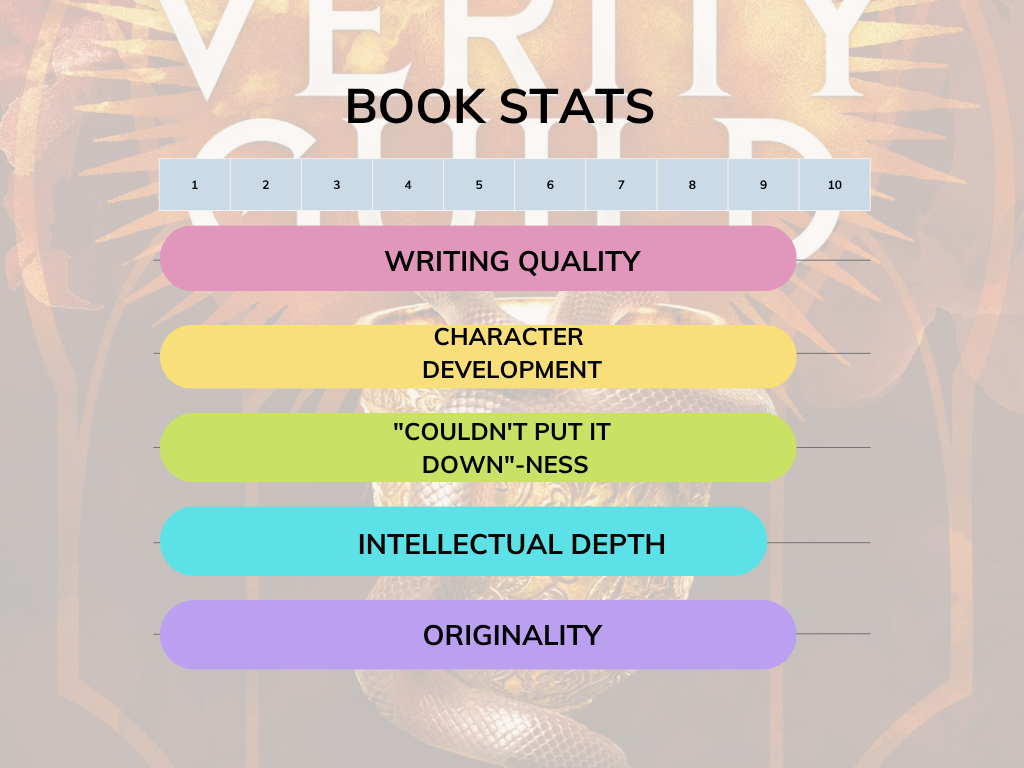
That doesn’t mean Corland has abandoned her recognizable writing style. Her prose remains accessible, straightforward, and engaging without relying on excessive descriptions or overly flowery language. The difference is primarily in the atmosphere and the kinds of conflicts she’s exploring.
I really liked that evolution because it demonstrates her versatility as a storyteller while preserving the qualities that made me enjoy her earlier work.
Roman-Inspired Fantasy Done Right
Can we talk about the setting? Because I loved the Roman-inspired atmosphere of this novel.
I’ve noticed that Roman-inspired fantasy seems to be becoming increasingly popular, and honestly, I’m not complaining. There’s something fascinating about drawing inspiration from Roman politics, military structures, religious institutions, and the complicated relationships between different territories.
Corland uses that inspiration to create a world filled with political tension, powerful institutions, and dangerous secrets. The setting provides an excellent foundation for the mystery unfolding throughout the novel, particularly because so much of the conflict revolves around authority, truth, and the consequences of uncovering information that powerful people would rather keep hidden.
I thought the atmosphere worked beautifully with the story Corland wanted to tell. It felt immersive without becoming overwhelming, and the political backdrop helped make the characters’ personal conflicts considerably more interesting.
Kera, the Verity Guild, and the Burden of Truth
The story follows Kera, a young woman who holds an important position within the Verity Guild, an institution devoted to uncovering truth.
Her role is fascinating because people come to her with their confessions, and she essentially provides a form of absolution. There’s almost a religious quality to the process, reminiscent of confessing your sins and being assigned penance.
But Kera’s responsibilities go beyond simply listening to confessions. She’s expected to seek out the truth, particularly when complicated matters arise within the political structure of the world.
She’s also unusually young for the position she holds, which creates an interesting layer of insecurity. Kera is surrounded by people with considerably more experience and authority, and she doesn’t always feel entirely comfortable with the responsibilities placed upon her.
I liked that about her characterization. She’s capable and intelligent, but she isn’t completely confident in herself, making her feel more believable.
Of course, Kera also has a rather significant secret.
Death Magic and a Secret That Could Get Her Killed
Kera belongs to a people associated with death magic, a group believed to have been completely eradicated.
As far as she knows, she’s the last surviving member of her kind.
And absolutely nobody can find out.
Her heritage isn’t simply something she keeps private because she doesn’t want to discuss her past. It’s a secret that could get her killed if the wrong people discover it.
That immediately creates tension because Kera is working within an institution devoted to uncovering the truth while desperately concealing one of the most important truths about herself.
I loved that contradiction.
Her entire professional identity revolves around seeking honesty, yet her survival depends on deception. It’s an excellent foundation for character conflict, particularly once people begin dying under suspicious circumstances.
And when those deaths start pointing toward Kera, things become considerably more complicated.
Enter Tor: The Praetorian Who Doesn’t Trust Her
Tor is a Praetorian tasked with investigating the increasingly suspicious events surrounding the conclave, and he is not particularly fond of Kera.
The feeling is mutual.
Kera finds him obnoxious, while Tor seems perfectly willing to believe she’s responsible for the murders. Their relationship begins with plenty of hostility, suspicion, and mutual irritation.
Naturally, I loved it.
What makes their dynamic particularly interesting is that Kera has legitimate reasons to fear him. She’s hiding something that could result in her execution, and Tor’s responsibilities place him in exactly the kind of position where uncovering her secret could become part of his investigation.
So even when their interactions are entertaining, there’s an underlying danger to their relationship.
Kera cannot afford to trust him completely, and Tor isn’t exactly eager to give her the benefit of the doubt.
That creates some fantastic tension.
A Murder Mystery with And Then There Were None Vibes
One of my favorite aspects of Verity Guild was the murder mystery.
As representatives gather at the conclave to resolve disputes between different regions, people begin dying. With the characters effectively trapped together and suspicion spreading, the atmosphere becomes increasingly tense.
It immediately reminded me of Agatha Christie’s And Then There Were None.
You have a group of people gathered in one location, a murderer potentially hiding among them, and an escalating sense of danger as the body count rises.
And I absolutely loved that setup.
There’s something incredibly compelling about a mystery where everyone is suspicious and nobody can be entirely trusted. Every interaction becomes potentially significant because you never know which character might be hiding something important.
The fact that someone appears to be framing Kera makes the situation even more dangerous. She’s already hiding her heritage, and now she’s being forced to defend herself against crimes she didn’t commit.
The combination of political intrigue, murder mystery, and dangerous magic worked incredibly well for me.
Kera and Tor’s Enemies-to-Lovers Romance
Now, let’s talk about the romance because the tension between Kera and Tor was fantastic.
These two genuinely dislike each other when the story begins. Tor suspects Kera of murder, Kera thinks he’s an obnoxious jerk, and neither is particularly interested in making the other’s life easier.
But as circumstances force them to work together, their relationship gradually changes.
They move from enemies to reluctant allies, and eventually, something considerably more intimate develops.
I appreciated how Corland handled that progression because the romantic tension feels connected to the larger conflict. Their relationship doesn’t exist separately from the murder investigation or Kera’s dangerous secret.
Instead, those circumstances actively shape the way they interact.
There’s suspicion, attraction, frustration, and a growing awareness that their initial impressions of each other might not tell the entire story.
And the chemistry?
Absolutely there.
The Romance Has Heat Without Losing the Plot
One of my biggest concerns going into Verity Guild was whether the romance would overshadow the fantasy.
Thankfully, that wasn’t an issue for me.
The romantic tension between Kera and Tor is definitely a major part of the story, and things become increasingly steamy as their relationship develops. But the novel never completely loses sight of the larger mystery or the political conflicts surrounding them.
I thought Corland did a particularly good job balancing those elements. The romance adds emotional tension to the investigation, while the investigation creates circumstances that challenge the characters’ assumptions about one another.
That balance is exactly what I want from fantasy romance.
I don’t mind a story being romantic. I just want the romance to feel like a natural part of a compelling narrative rather than something that exists at the expense of the plot.
For me, Verity Guild achieved that balance.
Character-Driven Storytelling Is Corland’s Strength
Something I’ve noticed across Mai Corland’s books is how heavily she relies on character-driven storytelling.
Her writing isn’t particularly ornate, and she doesn’t spend endless pages describing every detail of her world. Instead, she focuses on her characters, their relationships, and the conflicts that develop between them.
That approach works especially well when the characters are compelling.
And I think Kera and Tor are.
I wouldn’t necessarily describe either of them as extraordinarily complex, but they’re likable, interesting, and distinct enough to carry the story.
Kera’s insecurity, dangerous heritage, and determination to protect herself make her an engaging protagonist. Meanwhile, Tor’s suspicion and responsibilities create an excellent contrast to her personality.
Their individual motivations are strong enough to make them interesting independently, while their interactions provide some of the novel’s most entertaining moments.
I also appreciated the dual POV because it allows readers to understand both characters rather than experiencing their relationship entirely through one perspective.
Accessible Writing and Excellent Atmosphere
Another reason I enjoy Corland’s books is how easy they are to read.
Her writing is accessible without feeling simplistic, and she has a talent for maintaining narrative momentum. She doesn’t rely on elaborate prose to create atmosphere or establish emotional stakes.
Instead, she allows the setting, conflicts, and character interactions to do much of that work.
With Verity Guild, that approach creates a particularly effective combination of political fantasy and murder mystery. The Roman-inspired setting establishes the atmosphere, while the deaths and escalating suspicion keep the story moving.
I liked how the tension continued building throughout the novel, particularly as Kera and Tor became more entangled in both the investigation and their feelings for each other.
The story never needed excessive embellishment to keep me interested.
The characters and the mystery were more than enough.
That Ending Was Absolutely Rude
And then we have the ending.
Excuse me?
What exactly was that?
I knew things were getting complicated, but I was not prepared for the way Corland decided to leave us hanging.
The cliffhanger was incredibly frustrating in the best possible way because now I desperately want to know what happens next.
After spending an entire novel watching Kera and Tor move from enemies to allies to lovers, I’m invested in their relationship and the larger mystery surrounding the conclave.
And now I have to wait for another book.
Wonderful.
I am genuinely excited for the sequel because I want to see where Corland takes these characters, especially after everything that happens toward the end.
Mai Corland Is Becoming a Favorite Author
I think Verity Guild has officially convinced me that Mai Corland is becoming one of my favorite fantasy authors.
I enjoyed The Broken Blades trilogy, particularly how the storytelling improved across the series, and now she’s delivered another book that I found thoroughly entertaining.
What impresses me most is her ability to write compelling character dynamics while maintaining an engaging plot.
Her stories are easy to get into, her characters are enjoyable to follow, and she knows how to build tension between people with conflicting motivations.
I also appreciate that Verity Guild feels different from her earlier trilogy while still retaining the qualities that make her writing recognizable.
That combination makes me excited to see what she writes next.
Final Thoughts
Verity Guild by Mai Corland was a fantastic surprise that delivered an atmospheric blend of Roman-inspired fantasy, murder mystery, political intrigue, and enemies-to-lovers romance.
I loved the setting, particularly the way Corland incorporated Roman-inspired political structures and institutions into the fantasy world. The conclave provided an excellent backdrop for the mystery, and the escalating murders created a wonderfully tense atmosphere reminiscent of And Then There Were None.
Kera and Tor were equally enjoyable to follow. Their individual personalities and motivations made them compelling protagonists, while their mutual suspicion and growing attraction created fantastic romantic tension.
I also appreciated the more mature tone compared to The Broken Blades trilogy. Corland’s writing remains accessible and character-driven, but the atmosphere and conflicts feel more firmly rooted in adult fantasy.
And that ending?
Absolutely unacceptable.
I need book two because I am not okay with being left on that cliffhanger.
Ultimately, Verity Guild reinforced why I’ve become such a fan of Mai Corland’s storytelling. She knows how to write engaging characters, build compelling relationships, and keep readers invested in the mysteries surrounding them.
I’m officially looking forward to whatever she has planned next.
Highly recommended.