
This thought-provoking YA fantasy blends paganism and Christianity in a sweeping, character-driven tale that challenges belief systems while exploring love, faith, and the complexity of divine power.
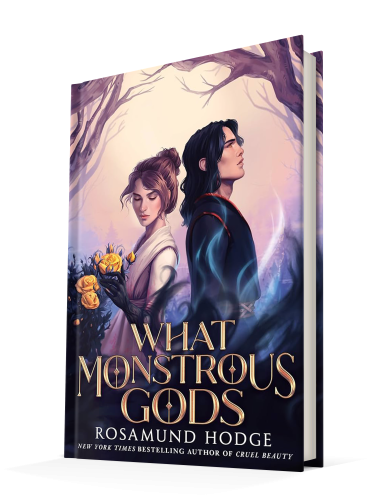
Religion in fantasy can be a tricky thing—too heavy-handed, and it risks alienating readers; too vague, and its impact is lost. But What Monstrous Gods strikes an impressive balance. It dives deep into belief systems, blending pagan and Christian symbolism with a compelling portal fantasy that never feels preachy. With a protagonist caught between two faiths and a world on the brink of spiritual collapse, this story explores how conviction, identity, and love collide in surprising—and often uncomfortable—ways.
Exploration of Religious Themes
What Monstrous Gods is a challenging book to review—not because of its content, but because of the themes woven throughout the narrative.
I’m not sure whether the author identifies as Christian, but there’s a clear reverence for Christianity present in the story. That could be a turn-off for some readers; personally, I tend to lose interest when a novel begins to feel like a vehicle for preaching. When I pick up a book, I want to be immersed in the story—not lectured about belief systems. Thankfully, Hodge doesn’t fall into that trap.
Instead, she blends elements of both paganism and Christianity in a way that feels organic and open to interpretation. She never explicitly says, “This is Jesus Christ,” or “This is Christianity.” Rather, the novel presents two intersecting belief systems through a lens that invites thoughtful reflection.
Lia’s Quest
What Monstrous Gods follows Lia, whose world is shaped by pagan gods she sees as benevolent. These deities offer miracles freely—at least on the surface. When Lia experiences her own miracle, she is called to journey through a mysterious gateway to meet the gods and restore their connection to her realm. This mission arises because of Ruven, a centuries-old sorcerer who casts a Sleeping Beauty–style spell on the royal family, severing the bond between the gods and their people.
Lia’s quest takes her through multiple portals as she works to defeat Ruven and reawaken the royal bloodline. But along the way, she begins to question the true nature of her gods. Like the deities of Greek myth, they are self-interested, manipulative, and dangerously detached from the consequences of their actions. They expect gratitude simply for existing—regardless of the cost to those who worship them.
After Ruven is defeated, his ghost lingers, and Lia is confronted by his heretical belief in a single God and a savior who died on a cross. For Lia, this concept is both foreign and unfathomable. Why would anyone worship a god who embraced suffering, especially in contrast to her own beautiful, powerful, statue-like gods?
Discussion of Religion and Humanity
What follows is not a condemnation of either belief system, but a dialogue. As someone who identifies as pagan and comes from a Catholic background, I appreciated the respectful tension between these perspectives. Lia and Ruven challenge each other constantly—he sees her faith as flawed, and she sees his in the same light. Yet over time, they begin to recognize that both worldviews have shortcomings—and strengths.
Their conversations feel authentic and necessary. It’s rare to see a YA fantasy novel that engages with religion so directly while maintaining such nuance. The discussions they have aren’t about winning or conversion; they’re about understanding. As the story progresses, their passionate debates lead to unexpected intimacy. They fall in love, not in spite of their differences, but because of them.
I don’t want to spoil the ending, but I will say that it lands with emotional and thematic resonance. It explores belief, conviction, and the danger of blind faith with remarkable humanity.
Final Thoughts
While What Monstrous Gods may not appeal to everyone, I have tremendous respect for Hodge as a writer. Tackling belief and spirituality within a fantasy framework—especially in a way that neither preaches nor vilifies—is no easy feat. The characters are compelling, and the philosophical tension only enriches the world-building. There are numerous moments throughout the story that invite introspection and critical thinking.
This would be an excellent book club pick. The themes it touches on—faith, agency, doubt, identity, love—are ripe for discussion and personal reflection. Ultimately, this is a bold and fascinating novel that I’m glad I read, and I’d encourage others to explore it with an open mind.



Donate with Paypal
Help Cyn’s Workshop improve and grow with a one-time donation. Donations go towards equipment, writing suppliments and giveaways to the bookish community.
$1.00