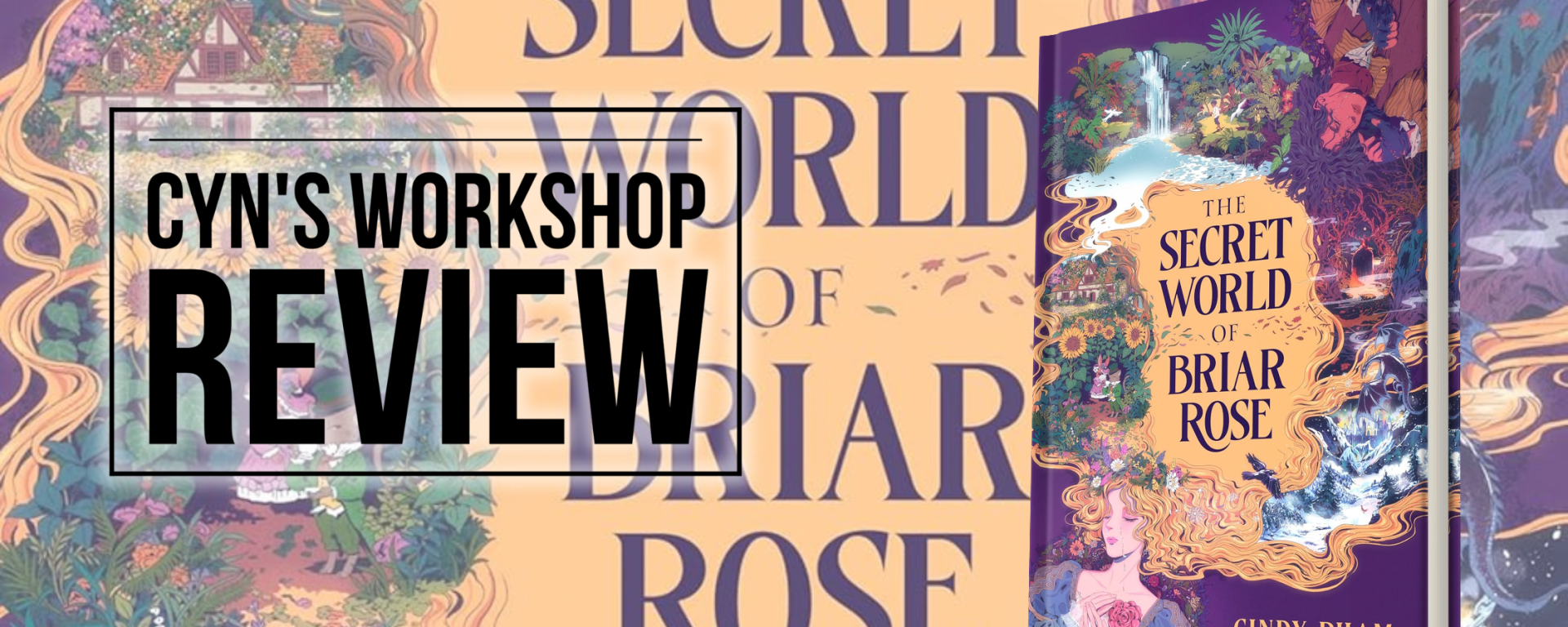
The Secret World of Briar Rose blends fairy tale magic, sapphic representation, and powerful explorations of depression into a captivating YA fantasy filled with heart, healing, and unforgettable character growth.
Fairy tale retellings are a dime a dozen these days, but every once in a while one comes along that feels genuinely fresh. The Secret World of Briar Rose by Sindy Fink takes the familiar story of Sleeping Beauty and transforms it into something thoughtful, emotional, and surprisingly poignant. While I did have a few issues with some aspects of the characterization, particularly when it came to Corrine, the novel ultimately won me over with its exploration of depression, self-worth, found family, and identity.
What could have been a simple fantasy adventure becomes something much deeper—a story about learning to live when simply existing feels easier.

A Fresh Take on Sleeping Beauty
One of the strongest aspects of the novel is how it reimagines the Briar Rose story.
The premise follows Corrine, a young woman struggling to survive in a kingdom ravaged by war. After her younger sister disappears while searching for the legendary sleeping princess, Corrine reluctantly follows her into the magical dream world connected to Briar Rose.
Meanwhile, readers also follow Amelia, the princess herself, through a series of flashbacks that count backward toward the day she falls into her century-long sleep.
This dual narrative structure works incredibly well. The gradual countdown creates a sense of anticipation as readers slowly uncover the truth behind Amelia’s curse, Prince Ezran, Malecine, and the kingdom’s complicated history. By the time the story reaches its pivotal revelations, every piece has fallen beautifully into place.
Depression in Its Many Forms
What surprised me most about this novel was its nuanced portrayal of depression.
Too often, stories present mental illness as though it affects everyone the same way. The Secret World of Briar Rose understands that depression can manifest differently from person to person.
Amelia’s struggles are rooted in isolation and self-loathing. Blessed by magical godmothers to be loved by everyone around her, she paradoxically feels unseen. Nothing about her life feels authentic. People adore her because they have been magically compelled to, not because they truly know her. As a result, she spends much of her life feeling disconnected from herself and the world around her.
Her depression manifests as numbness, hopelessness, and a desire to escape entirely.
Corrine, on the other hand, channels her pain into anger. Burdened by trauma, survivor’s guilt, and the responsibility of raising her younger sister, she lashes out at everyone around her. She’s prickly, defensive, and often difficult to like.
Yet she’s also incredibly relatable.
The novel captures something many readers will recognize: the awareness that you’re hurting others while simultaneously feeling unable to stop yourself. Corrine often understands when she’s being unfair, but that recognition doesn’t magically fix her behavior. That complexity makes her frustrating at times, but it also makes her feel real.
Character Growth and Found Family
Despite my frustrations with Corrine, I genuinely appreciated her character arc.
Both she and Amelia undergo significant personal growth throughout the story. Amelia learns to define herself outside of other people’s expectations and discovers her own strength. Corrine slowly begins to let go of some of the anger and guilt she’s been carrying for years.
Their journeys mirror each other in interesting ways. Both young women feel trapped by circumstances beyond their control. Both struggle with identity and self-worth. Both must learn to choose themselves before they can move forward.
I also loved the relationship between Amelia and Malecine.
Rather than portraying Malecine as a straightforward villain, the novel transforms them into one of its most compelling characters. Malecine simply wants connection, belonging, and family. Their bond with Amelia becomes one of the emotional anchors of the story and adds tremendous depth to the familiar Sleeping Beauty narrative.
A Dreamlike and Immersive Fantasy World
The dream world itself is wonderfully realized.
It constantly shifts and changes based on emotions, memories, and magic, yet it never becomes confusing. Instead, it feels appropriately dreamlike while remaining easy to follow.
The fantasy elements are imaginative without overwhelming the narrative. The changing landscapes, magical rules, and fairy tale influences all contribute to a setting that feels whimsical, eerie, and immersive all at once.
I found myself completely invested in uncovering how the dream world functioned and what role it would ultimately play in the story’s conclusion.
The Romance Didn’t Quite Work for Me
My biggest criticism comes from the romantic subplot.
Both Amelia and Corrine are clearly queer-coded throughout the novel, and I appreciated the sapphic representation. However, the romantic payoff felt underdeveloped.
The relationship between them works beautifully as a friendship built on mutual understanding and shared pain. Their emotional connection is believable and meaningful.
The kiss near the end, however, felt somewhat abrupt.
While I understood what the story was trying to accomplish, I never felt like the relationship had fully transitioned from friendship into romance. A little more development between them would have helped make that moment feel more earned and emotionally satisfying.
It’s not a major flaw, but it was one of the few elements that didn’t completely work for me.
Final Thoughts
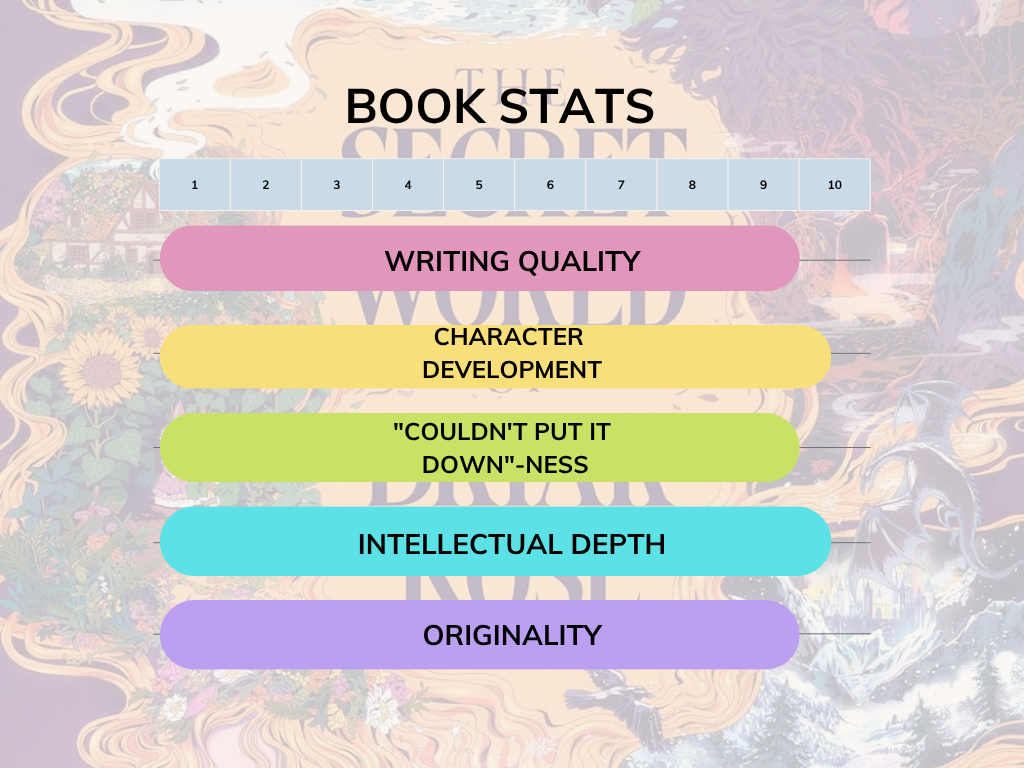
The Secret World of Briar Rose is a thoughtful and emotionally resonant YA fantasy that uses a familiar fairy tale framework to explore identity, depression, self-worth, and healing.
While Corrine can be difficult to like and the romance feels slightly underdeveloped, the novel excels in its character growth, mental health representation, worldbuilding, and emotional depth. Amelia’s journey in particular is one that will stay with me long after finishing the book.
This is a story about finding yourself when you’ve spent your entire life feeling unseen, and it handles those themes with compassion and grace.
If you’re looking for a fairy tale retelling that offers more than romance and magic, this is absolutely worth picking up.