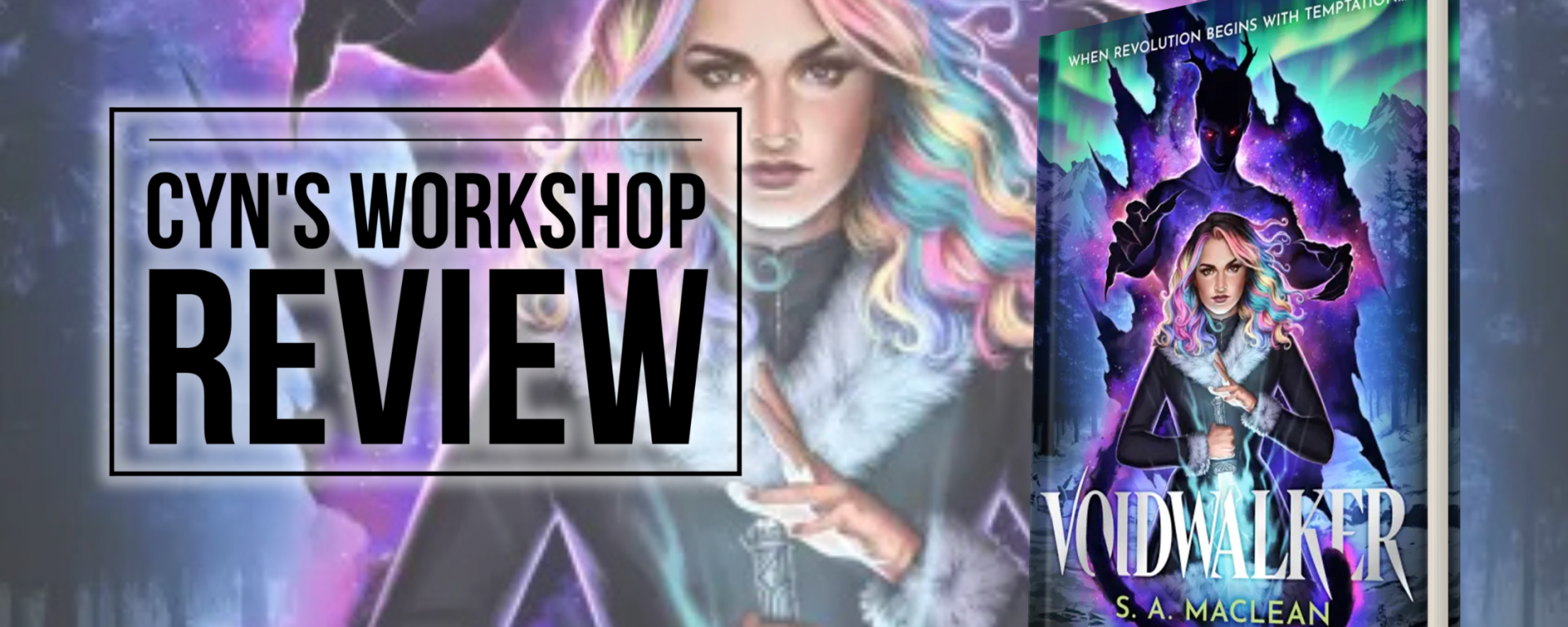
Voidwalker combines sinister fae mythology, compelling character development, and a beautifully paced friends-to-lovers romance, creating an immersive fantasy that nearly earned five stars.
Sometimes all it takes is an interesting cover and a recommendation from a friend to discover a genuinely fantastic book. That’s exactly what happened when I picked up Void Walker by S. A. MacLean for the LFG Book Club at Barnes & Noble Fort Lauderdale.
My friend Jeff, who hosts our LGBTQ+ fantasy book club, selected this one, and I honestly wasn’t entirely sure what to expect. The cover immediately caught my attention, but beyond that, I didn’t know whether the story would be something I’d enjoy.
Thankfully, I decided to give it a chance because I ended up loving it.
Between the fascinating fae-inspired mythology, dangerous magical creatures, emotional character development, and beautifully developed romance, Void Walker delivered an incredibly engaging reading experience. I had a few issues with the worldbuilding, but the characterization and pacing were so strong that I absolutely flew through this book.
And considering how chunky it is, that’s saying something.
Fiona Isn’t Always Likable, but She’s Understandable
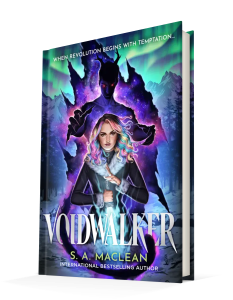
Let’s talk about Fiona, or Fee, as her friends call her, because I know she’s going to be a divisive character for some readers.
Fee can be abrasive, defensive, and occasionally downright annoying. She’s emotionally guarded, doesn’t particularly trust people, and has built some pretty substantial walls around herself. I can absolutely understand why some readers might struggle with her personality, especially early in the novel.
In fact, Jeff and I had a discussion about this very thing. He found Fee a little frustrating, whereas I didn’t particularly mind her attitude because I could tell almost immediately that there was something deeper happening beneath the surface.
Her behavior didn’t feel like abrasiveness for the sake of making her seem edgy or difficult. Instead, it felt rooted in trauma, fear, and years of emotional baggage that she hadn’t properly processed.
And that distinction makes all the difference for me.
I don’t mind following difficult characters when their behavior makes sense within the context of their experiences. What frustrates me is when a protagonist acts unnecessarily abrasive without any meaningful characterization supporting those choices.
With Fee, I could understand why she kept everyone at a distance, even before the full extent of her past was revealed.
Trauma Shapes Fee’s Character
One of the things I appreciated most about MacLean’s writing was how gradually Fee’s history was revealed.
Rather than immediately explaining every traumatic experience that shaped her personality, the novel provides small hints throughout the narrative. We learn about her alcoholic father, her absent mother, and the fears and guilt she’s been carrying for years.
Her diary also becomes an important element in understanding her emotional state, providing additional insight into the experiences she’s struggling to confront.
I liked that these revelations were woven into the story instead of being delivered through one enormous explanation. They allowed me to gradually understand Fee’s personality while watching her confront the experiences that had shaped her.
She’s dealing with grief, guilt, and what appears to be significant post-traumatic stress. Those experiences influence how she approaches relationships, how she reacts to danger, and why she’s so reluctant to let anyone get close to her.
Does that mean she’s never annoying? Of course not. There were definitely moments when I wanted her to make better decisions, but I understood where those decisions were coming from.
And as the story progressed, her earlier behavior made increasingly more sense.
What Exactly Is a Voidwalker?
The magical system was another aspect of the novel that immediately intrigued me.
When Fee was a child, she experienced a near-death event after drowning. In fact, she essentially died for a brief period before returning to life, and that experience left her with an extraordinary ability.
She’s a Voidwalker.
Voidwalkers possess the ability to cut through the magical barriers separating different realms, allowing them to travel between worlds that would otherwise be inaccessible.
I thought that was a fascinating concept because it establishes a magical system built around boundaries, veils, and the spaces separating different realities.
It reminded me a little of the realm divisions in A Court of Thorns and Roses, where magical borders separate different territories and crossing them isn’t always straightforward.
But in Voidwalker, Fee’s ability allows her to navigate those barriers in a way most people cannot.
That immediately makes her an important figure within a world where access to different realms can determine who holds power and who remains trapped.
The Daery Are Absolutely Terrifying
Now, let’s talk about the Daery because these creatures were fascinating.
They’re essentially fae-like beings who inhabit their own realm beyond the Void, but they’re considerably more sinister than the beautiful, mysterious fae we sometimes encounter in fantasy romance.
For one thing, they’re cannibals.
And they eat humans.
That’s certainly one way to establish a terrifying supernatural hierarchy.
The Daery also hold positions of power as governors, creating a political structure where protection and favors can come at an incredibly disturbing cost.
Want a favor from a Daery governor? Well, you might have to consider who they’re going to eat in exchange.
I loved how dark that made the world feel.
These aren’t simply magical beings with unusual powers and complicated personalities. They’re dangerous creatures whose relationships with humans are shaped by fear, exploitation, and survival.
And that makes Antal particularly interesting.
Antal Is a Different Kind of Monster
Antal is a Daery governor, but he doesn’t behave the way others of his kind expect him to.
Unlike the Daery who willingly hunt and consume humans, Antal wants to be better. He doesn’t want to participate in the same cruelty that defines so much of his society, and that decision makes him appear weak to others.
Eventually, another Daery challenges and dethrones him, creating a conflict that becomes central to his character development.
I loved Antal because he’s a character who recognizes the monstrous aspects of his own nature and actively wants to change.
He’s not simply asking other people to accept him as he is. He’s questioning whether the way his people have always behaved is something he wants to continue.
That internal conflict gives him a fascinating emotional foundation, especially when his story becomes intertwined with Fee’s.
Both characters are struggling with their own demons, although those struggles manifest in very different ways.
And that’s where their relationship becomes particularly compelling.
Beauty and the Beast, but Make It Dark Fantasy
Fee and Antal’s relationship gave me some serious Beauty and the Beast vibes.
There’s something wonderfully familiar about a guarded young woman entering the home of a dangerous supernatural being, only to discover that the supposed monster is considerably more complicated than he initially appears.
Of course, Voidwalker gives that familiar dynamic its own darker identity through the Daery mythology and the characters’ emotional histories.
What I especially appreciated was that Fee and Antal don’t immediately fall into a romantic relationship.
There’s attraction, certainly, but attraction isn’t the same thing as love.
Instead, they gradually develop a friendship, learning about each other’s experiences and beginning to understand the emotional wounds they’ve both been carrying.
That progression made their eventual romance feel considerably more meaningful.
Friendship Before Romance Makes Everything Better
I love when a romance begins with a genuine friendship.
There’s something incredibly satisfying about watching two characters gradually develop trust, emotional intimacy, and mutual respect before their relationship becomes romantic.
And that’s exactly what happens with Fee and Antal.
They’re both carrying significant emotional baggage, and neither is particularly equipped to navigate a healthy relationship when they first meet. But rather than expecting romance to magically solve their problems, the story allows them to grow individually.
Fee has to confront her trauma, guilt, and fear of vulnerability. Antal has to confront the expectations of his own society and decide what kind of person he wants to become.
They help one another through those struggles, but their growth isn’t entirely dependent on their romantic feelings.
That distinction matters.
I don’t want characters to become better people simply because they’ve fallen in love. I want them to recognize the need for change themselves, with their relationships providing encouragement and support along the way.
Fee and Antal’s relationship does that beautifully.
Two Characters Learning to Face Their Demons
The strongest element of Void Walker was easily the characterization.
Both Fee and Antal are deeply affected by their pasts, and the novel takes the time to explore how those experiences continue influencing their behavior.
Fee’s emotional walls aren’t something that disappear the moment she meets someone attractive. She has to actively confront the fears and painful memories that have shaped her life.
Likewise, Antal’s desire to become better doesn’t immediately erase the expectations or dangers associated with being a Daery governor.
Their development feels gradual and earned because the story allows them to make mistakes, struggle with difficult emotions, and slowly recognize what they need to change.
I also appreciated that their relationship wasn’t built around one character rescuing the other.
Instead, they become a support system.
They challenge one another, encourage one another, and gradually create a relationship based on mutual understanding.
That’s the kind of character-driven romance I love reading.
The Worldbuilding Needed a Little More Depth
As much as I enjoyed Voidwalker, I did have one significant criticism.
I wanted more worldbuilding.
The concept of the Void and the different realms was fascinating, but I didn’t always feel like I had a clear understanding of how the world was structured.
For example, the story introduces different regions with dramatically different environments, including frozen territories and areas associated with warmer seasons.
I wanted to understand more about how those regions connected geographically and magically. Were they entirely separate realms, different territories within the same world, or something more complicated?
I could generally follow the story, but I wanted a stronger foundation for understanding the physical and magical structure of the setting.
That additional context would have made the world feel even more immersive.
I Wanted More Daery History
I also wanted to know more about the origins of the Daery.
Throughout the novel, there are hints that the world wasn’t always structured the way it is now. That immediately made me curious about the history of these supernatural beings and how they came to occupy their current positions of power.
Were the Daery always connected to these territories? How did they become governors? What events shaped their relationship with humans, and how does the Void factor into that history?
These were questions I found myself asking while reading.
Now, I don’t necessarily need every answer in the first installment of a series. I enjoy discovering the history of a fantasy world gradually, especially when those revelations contribute to a larger overarching narrative.
But I would have appreciated a little more information to help ground the setting.
I’m hoping the second book explores those elements in greater detail because the mythology has so much potential.
A Complete Story Without a Frustrating Cliffhanger
One thing I really appreciated about Void Walker was how satisfying the ending felt.
Yes, there’s a second book, and yes, the novel introduces hints of a larger overarching story. But the central narrative surrounding Fee and Antal reaches a satisfying conclusion.
You don’t necessarily have to continue the series to feel like you’ve experienced a complete story.
And I love that.
Sometimes I want to read a fantasy novel, enjoy the characters, experience their journey, and reach an ending that doesn’t leave me desperately searching for the next installment.
There’s something refreshing about a story that allows its characters to complete an emotional arc while still leaving room for future adventures.
That’s exactly what Voidwalker accomplishes.
The larger world clearly has more stories to tell, but Fee and Antal’s journey feels complete enough that readers can choose whether they want to continue.
Personally, I’m absolutely reading book two.
Excellent Pacing for a Chunky Fantasy
Another thing I loved was the pacing.
Voidwalker is a fairly substantial book, but it never felt particularly long while I was reading it.
And that’s one of my favorite reading experiences.
There’s something so satisfying about picking up a chunky fantasy novel, expecting it to take a while to get through, and then suddenly realizing you’ve flown through hundreds of pages because the storytelling is so engaging.
That’s exactly how I felt here.
The character development, romantic tension, dangerous encounters, and supernatural conflicts all worked together to maintain the story’s momentum.
I never felt like the plot was dragging or that the author was spending too much time on unnecessary details.
The rising tension was especially effective because it wasn’t limited to external threats. Fee and Antal’s emotional struggles were just as important as the dangers they faced, giving the story multiple layers of conflict.
Final Thoughts
Voidwalker by S. A. MacLean was a fantastic surprise that delivered compelling characterization, dangerous fae-inspired mythology, and a beautifully developed romance.
I loved Fee and Antal as individual characters, particularly how their personal struggles shaped their behavior and relationships. Fee’s abrasive personality might frustrate some readers, but I appreciated that her emotional walls were grounded in trauma and gradually became more understandable as her history was revealed.
Antal was equally compelling because of his desire to become better than the monstrous expectations placed upon him. Their relationship worked beautifully because they developed as individuals before becoming romantically involved, creating a friendship that eventually blossomed into something more.
I also appreciated the pacing. Despite being a substantial fantasy novel, the story moved effortlessly, balancing emotional character development with supernatural danger and an engaging plot.
My only real criticism was the worldbuilding. I wanted more information about the structure of the different realms, the history of the Daery, and the magical systems connecting everything together.
A little more development in those areas would have made this a five-star read for me.
Still, I thoroughly enjoyed the story, and I’m genuinely looking forward to continuing the series.