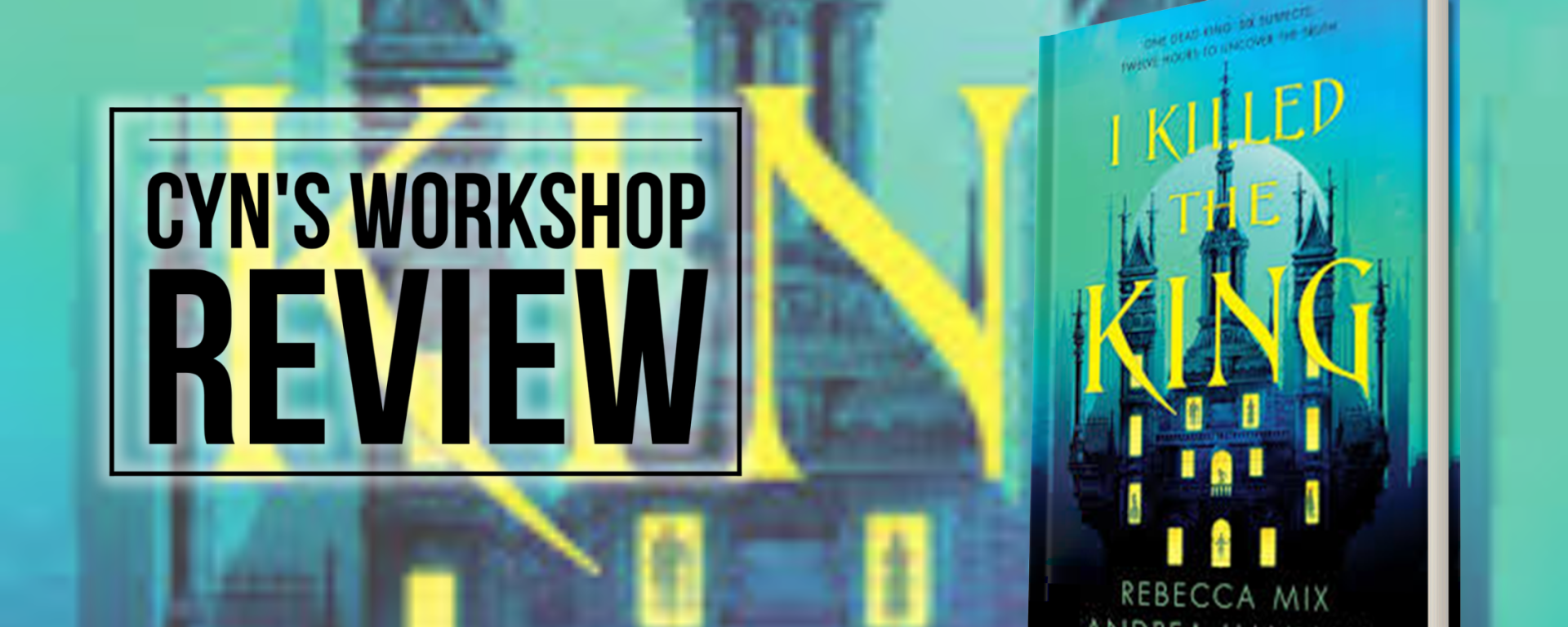
I Killed the King delivers a fresh fantasy take on the classic whodunit, combining political intrigue, magic, and an unpredictable murder mystery with plenty of satisfying twists.
As someone who absolutely loves a good murder mystery, I Killed the King immediately caught my attention. Give me Knives Out, Clue, or just about any classic whodunit, and I’m happy. What made this novel stand out was its premise: a traditional locked-room mystery set in a fantasy world.
It’s a combination I hadn’t read before, and while the execution wasn’t perfect, the originality alone made it a memorable experience.
A Murder Mystery in a Fantasy Kingdom
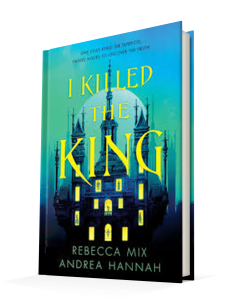
The story opens on a dark and stormy night during a masquerade ball celebrating a long-awaited peace treaty between two kingdoms.
Six people find themselves gathered around the king when darkness suddenly engulfs the room. Moments later, the lights return—and the king is dead.
Now everyone present becomes a suspect.
Among the cast are a prince, a foreign princess, a royal guard, an assassin, a necromancer masquerading as a healer, and a Beast Master. Each has secrets, hidden motivations, and connections to the events unfolding within the castle walls.
From the very beginning, the novel leans heavily into its mystery, inviting readers to piece together clues alongside the characters.
The Mystery Is the Star
The strongest aspect of I Killed the King is undoubtedly its central mystery.
This is a true whodunit. Every revelation leads to another question, every character has something to hide, and each point of view slowly reveals another piece of the larger puzzle.
What I appreciated most was that the solution genuinely surprised me.
The identity of the killer wasn’t even on my radar, which is exactly what I want from a mystery novel. Looking back, there are clues sprinkled throughout the story that make perfect sense in hindsight without making the reveal feel obvious. Those are my favorite kinds of mysteries—the ones that make you want to immediately flip back through the pages to see everything you missed.
Fantasy That Supports the Story
Although this is a fantasy novel, the magical elements remain secondary to the mystery.
The fantasy primarily enriches the setting and mythology rather than dominating the plot. Magic exists, but it serves the investigation instead of overshadowing it.
The two characters who stood out most to me were the necromancer and the Beast Master because their magical abilities are deeply woven into both their identities and the unfolding mystery. Their powers naturally contribute to the investigation while giving them stronger individual personalities than many of the other characters.
One of the more enjoyable fantasy elements involves a basilisk roaming the castle grounds.
As if solving the king’s murder wasn’t enough, the characters also have to deal with a giant snake threatening everyone inside the castle. The two mysteries eventually intertwine in satisfying ways, adding another layer of intrigue to an already complex investigation.
Strong Plot, Weaker Characterization
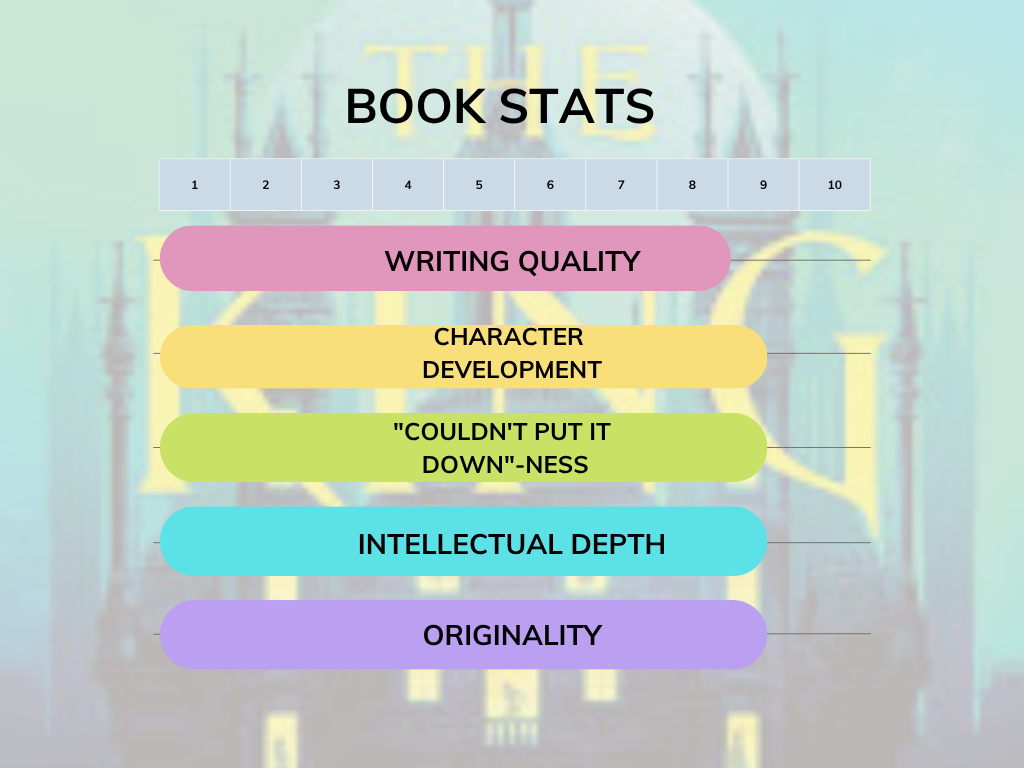
While I genuinely enjoyed unraveling the mystery, I struggled to connect with many of the characters.
With six major points of view, the novel has a difficult balancing act. Some characters receive enough development to feel distinct, while others never move beyond their narrative role.
The necromancer, Beast Master, and foreign princess receive the strongest characterization and emotional depth. By comparison, several of the remaining protagonists felt more like pieces on the mystery board than fully realized people.
Because of that, I found myself invested almost entirely in solving the murder rather than caring deeply about the individual characters involved.
The story gave me plenty of reasons to keep turning the pages, but not always enough reasons to become emotionally attached to everyone telling it.
Pacing and Structure
Overall, I thought the novel was well structured.
The pacing occasionally slows in the middle as the investigation circles through suspects and mythology, but it never completely loses momentum. More importantly, the authors reveal information at exactly the right moments to keep readers questioning every theory they develop.
Despite juggling six perspectives, the narrative remains easy to follow, and each point of view contributes something meaningful to the larger puzzle.
Everything eventually converges into a satisfying conclusion that answers the central mystery while still leaving the door open for future stories in this world.
A Romance That Needed More Time
One element that left me wanting more was the queer romance woven throughout the story.
The relationship is quietly built over the course of the novel, but by the ending it remains bittersweet rather than fully realized. I kept hoping the emotional payoff would match the investment the story had been building, but it never quite reached that point.
It wasn’t enough to hurt the novel overall, but it did leave me wishing for a little more closure.
Final Thoughts
I Killed the King succeeds because it fully commits to being a fantasy murder mystery.
The mystery itself is clever, well-plotted, and genuinely surprising, while the fantasy elements enhance the setting without overwhelming the investigation. Although I wish the larger ensemble cast had received stronger characterization and deeper emotional development, the central whodunit kept me thoroughly engaged from beginning to end.
If you’re a fan of Knives Out, Clue, or locked-room mysteries and you’ve been looking for a fantasy novel that embraces those same storytelling traditions, this is definitely worth picking up.