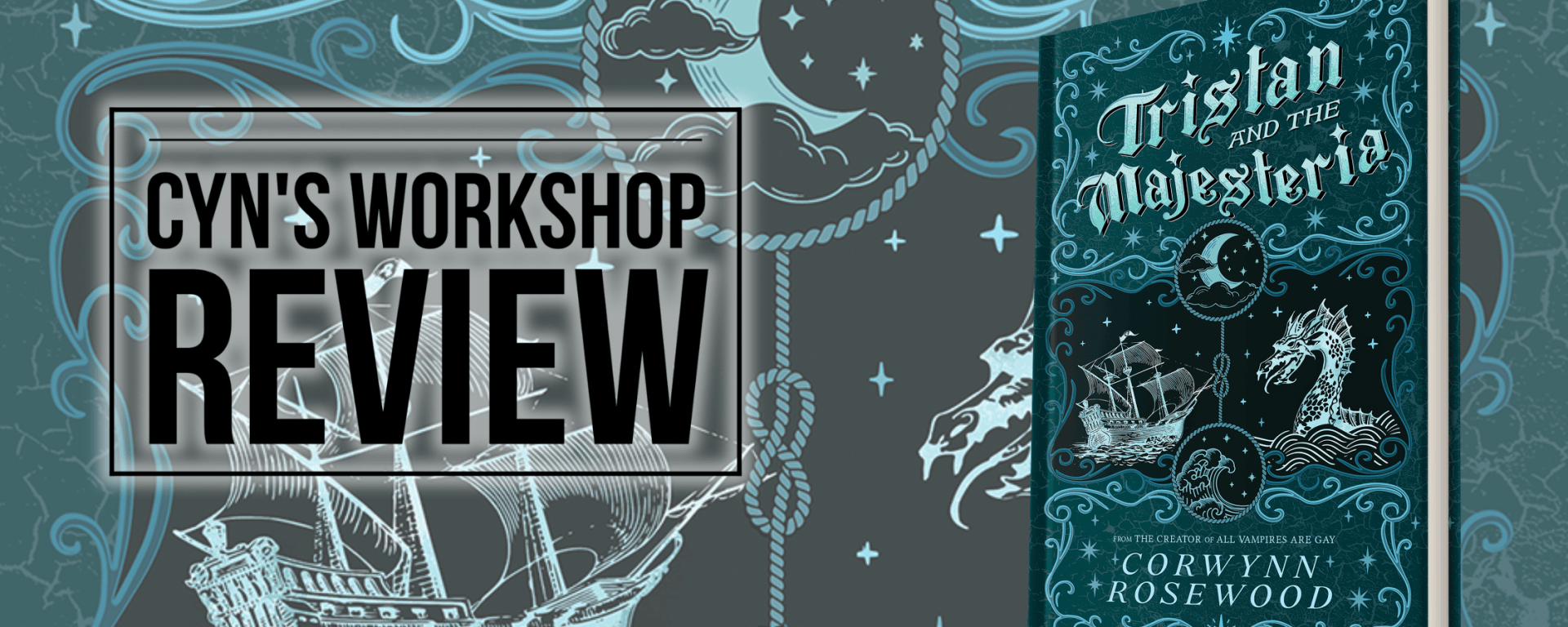
Tristan and the Magisteria has magical mice, pirates, romance, and plenty of cozy charm, but its slow pacing and underdeveloped character dynamics kept me from becoming fully invested.
I really wanted to love Tristan and the Magisteria.
I was part of the author’s street team, and when I first heard about the book, I genuinely thought it sounded like something made for me. A queer cozy fantasy rom-com with magic, pirates, and an adventure at sea? Sign me up.
Unfortunately, this ended up being one of those frustrating reads where I didn’t hate the book—I just didn’t particularly love it either.
There are cute ideas here. There are magical mice, a pirate captain, a powerful Cinder Flower, plenty of cozy slice-of-life moments, and a protagonist who prepares for a sea voyage by reading smutty pirate romances.
That last part is honestly adorable.
But despite all those ingredients, the story never fully grabbed me.
Cozy Doesn’t Have to Mean Nothing Happens

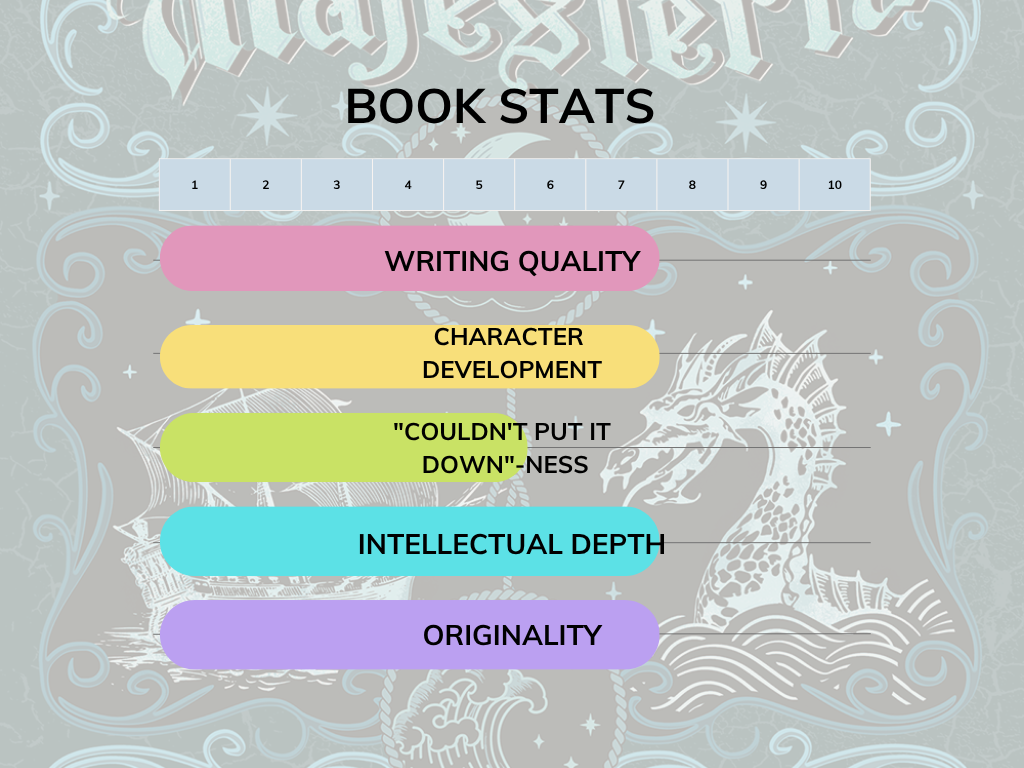
My biggest problem with Tristan and the Magisteria was the pacing.
I love cozy fantasy. Legends & Lattes is one of my benchmarks for the genre because it proves that a story can be low-stakes and slice-of-life while still giving readers something to become emotionally invested in.
Cozy does not have to mean action-packed.
But I still need momentum.
For roughly the first half of Tristan and the Magisteria, I kept waiting for something to really pull me into the story. Tristan is traveling aboard a ship, they need to transport the incredibly powerful Cinder Flower to a coronation, and there is danger surrounding mages.
Those are interesting ingredients.
The problem was that the journey felt stretched out.
By around the halfway point, I found myself skimming because I wasn’t invested enough in either the plot or the characters to remain completely engaged.
That’s never a great sign.
A Story That Could Have Been More Concise
I think this novel would have benefited tremendously from being tighter.
There are plenty of slice-of-life moments, but after a while, those scenes began to feel repetitive rather than enriching. Instead of making me feel like I was living aboard this ship alongside Tristan and the crew, they made me wonder when the larger story was finally going to begin.
And eventually, it does.
The final quarter has considerably more momentum, and once the story finally started bringing its different elements together, I stopped skimming and became more interested.
But I shouldn’t have to get through three-quarters of a book before feeling that way.
Cutting some of the earlier material and bringing the central conflict forward could have made the entire journey feel much more purposeful.
Where Was the Queer Rom-Com?
Another element that confused me was the marketing.
I went into Tristan and the Magisteria expecting a queer cozy fantasy rom-com, so naturally I expected the queer romance to be a prominent part of the story.
There is queer representation on the page. Tristan expresses attraction beyond a single gender, and Ren’s romantic history also establishes attraction to more than one gender.
But because the book had been marketed so heavily to me around its queerness, I expected that element to have a much stronger presence in the narrative.
Instead, it felt relatively understated.
There’s absolutely nothing wrong with casually queer characters whose identities don’t become a major conflict or storyline. In fact, it’s wonderful when fantasy worlds simply allow queer people to exist without requiring their identity to become a source of trauma.
My issue was more about the expectations created by the marketing.
When “queer rom-com” is one of the primary descriptions being used to sell me a book, I’m expecting the queer romance and romantic comedy elements to be significant parts of the reading experience.
For me, they weren’t prominent enough to match those expectations.
Tristan and Ren Needed More Chemistry
The romance itself also didn’t entirely work for me.
Tristan is attracted to Ren. That much is clear.
And given that Tristan loves smutty pirate romances and is now traveling with an actual pirate captain, you can absolutely see where the story is heading.
But knowing two characters are eventually going to become romantically involved isn’t the same thing as feeling their chemistry.
That’s what I was missing.
I wanted more yearning. More banter. More moments that made me desperate for these two characters to finally get together.
Instead, I actually found myself noticing more chemistry between Tristan and the hostess aboard the ship.
For a while, I genuinely wondered whether that was going to become the romance.
So when Tristan and Ren’s relationship finally progressed, it made sense structurally, but I wasn’t particularly invested emotionally.
Tristan Has Some Adorable Qualities
There are still things I liked about Tristan.
The fact that he reads smutty pirate romances and essentially uses them as research before traveling with actual pirates is hilarious.
That’s exactly the kind of character detail I wanted more of.
It gives him personality.
There are also moments of humor throughout the book, and while nothing had me laughing out loud, there were scenes that made me smile.
Tristan wasn’t a character I disliked.
I simply never became deeply attached to him.
And that became a recurring problem with the entire cast.
There were qualities I liked about individual characters, but I never reached that point where I genuinely cared about what happened to them.
Magical Mice Are Always a Win
The mice, however?
Adorable.
Making these tiny mice incredibly powerful mages was probably one of my favorite concepts in the entire novel.
It’s whimsical, charming, and exactly the kind of slightly ridiculous magical element I want from a cozy fantasy.
There are several ideas like this throughout the book that made me think, I should be loving this.
That’s probably why my disappointment was stronger than it otherwise would have been.
The individual ingredients are there.
They just never came together in a way that completely worked for me.
Maybe My Expectations Were Too High
I also have to acknowledge that expectations probably played a role in my experience.
I requested this book.
I joined the street team.
I was excited about it.
I went into Tristan and the Magisteria already expecting it to be something I would love, and sometimes those expectations work against a book.
Had I randomly picked this up without knowing much about it, maybe I would have approached the slower pacing differently.
But I don’t think expectations account for everything.
I still wanted stronger characterization, more chemistry, clearer momentum, and a tighter narrative.
Those elements simply weren’t there strongly enough for me.
The Final Quarter Shows What the Book Could Have Been
The frustrating thing is that once the book finally starts moving, there are some genuinely entertaining moments.
The threat surrounding mages becomes more immediate. The Cinder Flower becomes increasingly important. The adventure finally gains some urgency.
Suddenly, I was more interested.
That’s why I don’t think this was a bad book.
There’s a fun story buried in here.
I just wish the earlier sections had been condensed so that the stronger elements could take center stage sooner.
If the entire novel had carried the momentum of its final quarter, I think my experience would have been completely different.
Final Thoughts
Tristan and the Magisteria was ultimately an okay read for me.
I didn’t hate it. There are genuinely cute ideas throughout the story, from magical mice to pirate adventures to Tristan’s obsession with smutty pirate romances. The cozy atmosphere is certainly there, and readers who enjoy extremely low-stakes, leisurely slice-of-life fantasy may connect with the book much more than I did.
Unfortunately, I was bored for too much of it.
The first half felt overly drawn out, the characters never completely captured my attention, and Tristan and Ren’s romance lacked the chemistry I needed to become invested in them as a couple.
I also went into the book expecting its queer rom-com elements to be much more prominent based on how it was marketed. The representation is there, but it was considerably more understated than I anticipated.
Once the story reached its final quarter, things finally started moving, and I could see more of the book I originally thought I was getting.
I just wish we’d gotten there sooner.
Maybe my expectations were too high. Maybe this particular style of cozy fantasy simply wasn’t for me.
Either way, Tristan and the Magisteria had some charming moments and interesting ideas, but it never gave me enough to fully lose myself in the story.