The Twelve transforms the zodiac into a fascinating magical system while delivering strong characterization, clever misdirection, dark witchcraft, and an ending I absolutely did not see coming.
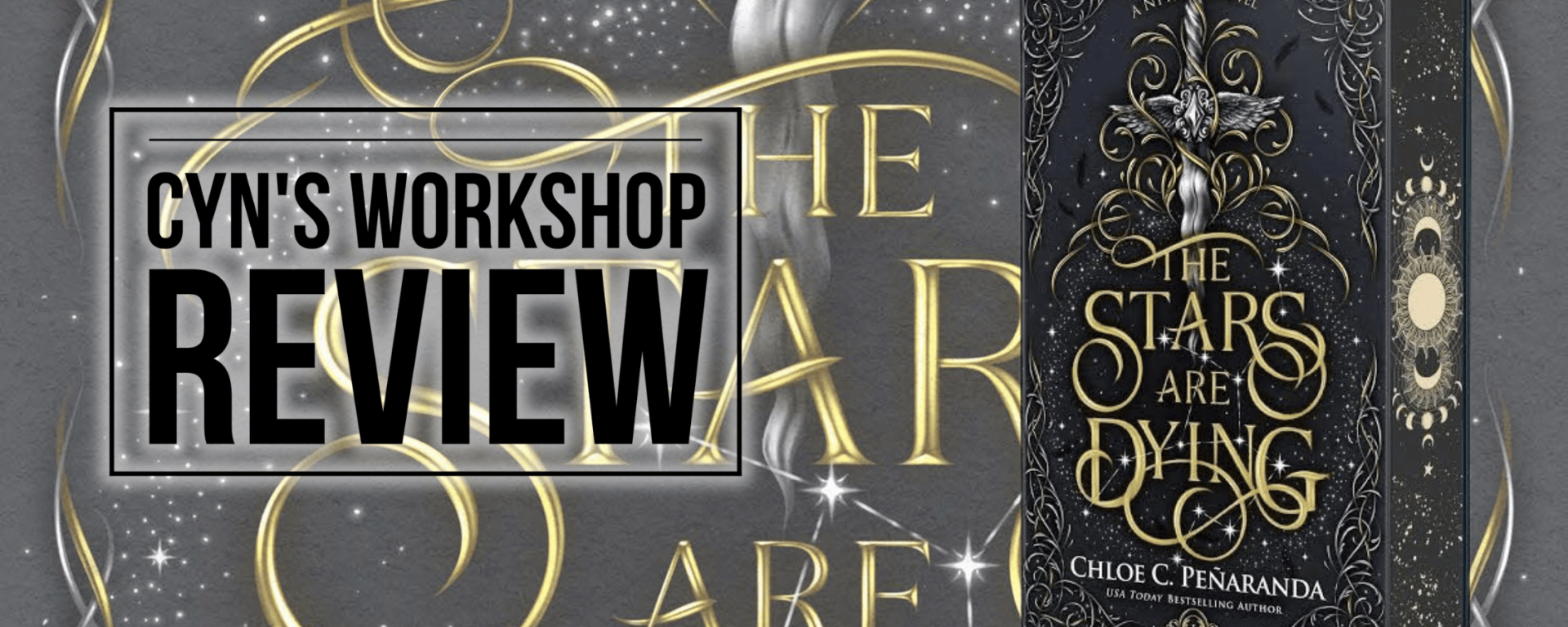
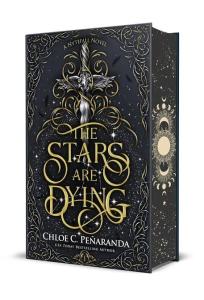
I really wanted to love The Stars Are Dying by Chloe C. Peñaranda.
This was one of our selections for Read with Cyn’s Workshop, my virtual book club, and I went into it with pretty high expectations. Between the dark fantasy atmosphere, vampire mythology, deadly competition, and mysterious romance, it sounded like exactly the kind of book I would enjoy.
And I did enjoy it.
Just not quite as much as I hoped.
There are some genuinely compelling elements here, particularly the supporting characters, the mythology, and the complicated relationship between Astraea and Nyte. Unfortunately, I struggled with Astraea herself for a significant portion of the novel, and when your protagonist isn’t particularly engaging, that can make an otherwise interesting story feel much slower than it actually is.
Still, I’m invested enough that I absolutely want to continue the series.
A Gilded Cage Is Still a Cage
The story follows Astraea, a young woman who has no memories beyond the last five years. She doesn’t know who she was before that. She doesn’t know where she came from. And she doesn’t know what happened to her. All she knows is what Hector, the man who took her in, has told her.
Unfortunately, Hector’s version of love is really just another form of imprisonment. He provides Astraea with luxury and comfort, but she’s effectively trapped in a gilded cage. Her beautiful surroundings don’t change the fact that he controls her life.
I thought this was a strong opening for her character. Astraea recognizes that Hector’s treatment isn’t love, and she desperately wants to escape.
There’s a ferocity to her early characterization that I really appreciated. She’s clever enough to hide a dagger from him, and she’s willing to use deception to protect herself. There’s tension. There’s determination. There’s a young woman actively fighting to reclaim control over her life.
And then, unfortunately, that characterization starts to fade.
A Deadly Competition and a Dangerous World
After escaping Hector, Astraea becomes involved in a dangerous competition tied to protecting a kingdom from vampires. Her decision is deeply personal, connected to a friend who sacrificed herself to help Astraea escape.
By entering under her friend’s identity, Astraea hopes to honor that sacrifice. The competition introduces some interesting elements to the worldbuilding, particularly the different types of vampires. We have the more traditional blood-drinking vampires, but we also have vampires who consume souls.
I loved that distinction. It adds another dimension to the supernatural mythology and makes the vampire threat feel a little different from what we’ve seen countless times before.
The competition itself also provides opportunities for Astraea to demonstrate her intelligence, especially when she’s forced to solve puzzles and navigate increasingly dangerous situations. I just wish that stronger characterization had emerged a little earlier.
Astraea Was My Biggest Struggle
My biggest issue with The Stars Are Dying was Astraea.
I understand why she’s written the way she is. She’s a woman with no memories, no real understanding of her identity, and years of emotional abuse shaping how she sees herself. Naturally, she’s going to struggle with understanding who she is. That makes sense.
The problem is that understanding why a character feels emotionally disconnected doesn’t necessarily make that character compelling to read. Astraea begins the novel with determination and a desire for freedom, but after that initial setup, much of her personality seems to disappear.
For nearly the first half of the book, I struggled to connect with her. She feels passive. She feels emotionally distant. And compared to the supporting characters, she simply doesn’t have the same presence.
I wanted more of the woman who was secretly hiding a dagger from her captor. I wanted that determination and cleverness to remain visible even while she was grieving and struggling to understand herself. Instead, it felt like her development stalled.
Character Development That Arrives Too Late
Thankfully, Astraea does become more interesting.
Once we move beyond the halfway point, she begins showing more initiative, intelligence, and personality. Her interactions with Nyte certainly help. He challenges her, frustrates her, and pushes her to question what she knows.
The competition also gives her opportunities to demonstrate that she’s far more capable than she initially appears. And I liked watching her gradually begin forming an identity.
The problem is how long it takes to get there. I think Peñaranda had the right idea with Astraea’s character arc. A woman who has lost her memories slowly rediscovering herself is a compelling premise. But I wish that transformation had been more consistently developed throughout the novel.
Rather than feeling like steady growth, it sometimes felt as though her characterization disappeared for a while before returning.
Nyte Is Complicated, and I Love That
Now, Nyte? Nyte is fascinating. He’s one of those characters where I genuinely don’t know what to do with him.
Do I trust him? Absolutely not. Do I like him? Sometimes. Do I want to know everything about him? Immediately.
He clearly knows far more about Astraea than he’s willing to admit, and that creates an incredibly complicated dynamic between them. One moment, they seem drawn to each other. The next, they’re practically enemies.
Then there’s another intimate moment. Then they’re back to threatening each other. And I’m sitting there wondering what exactly is happening between these two. Does he love her? Does he hate her? Does he love to hate her? Or does he hate that he loves her? I need answers.
The Romance Thrives on Secrets
What makes Astraea and Nyte’s relationship interesting is how much of it revolves around information Astraea doesn’t have.
Nyte knows things. Important things. And he refuses to share most of them. That can be frustrating, especially when you’re experiencing the story through Astraea’s perspective.
But I also think that frustration is intentional. We’re supposed to feel her confusion. We’re supposed to question his motives. And we’re supposed to wonder whether he’s protecting her, manipulating her, or doing some complicated combination of both.
That emotional uncertainty kept me invested even when Astraea’s individual characterization wasn’t working for me. I just hope the next book gives us more answers because Nyte’s constant withholding of information can only remain compelling for so long.
The Supporting Characters Steal the Show
One thing I will absolutely give Peñaranda credit for is her supporting cast. Characters like Cassia and Nyte have distinctive personalities and strong voices. Their interactions feel dynamic, and they often bring more energy to the narrative than Astraea herself.
That’s part of why I found Astraea’s characterization so disappointing. The author clearly knows how to write compelling characters. We see that throughout the novel. We see it in the relationships. We see it in the dialogue. We see it in the tension between characters who have complicated histories and conflicting motivations.
I just wanted that same depth from the person whose perspective we’re following.
Beautiful Mythology Hidden in Stories
One of my favorite aspects of the novel was its mythology. The Stars Are Dying draws inspiration from the myth of Astraea, but it also builds its own history and magical lore. I especially loved how that information is revealed.
Rather than relying entirely on lengthy explanations, Nyte shares stories with Astraea. To her, they initially seem like myths or fairy tales. But as a reader, you begin to realize there’s something more happening. He’s telling her things she needs to know. He’s revealing pieces of a larger history. And in some ways, he’s telling her his own story without directly admitting it.
I loved those moments. They have a magical, almost dreamlike quality, but there’s also genuine emotional depth beneath them. The stories feel meaningful rather than decorative. They’re some of the strongest examples of worldbuilding in the novel because they allow readers to discover the history alongside Astraea.
A Familiar Atmosphere That Still Works
There were several moments when The Stars Are Dying reminded me of The Serpent and the Wings of Night by Carissa Broadbent. And I love that book. Both stories have that dark, dangerous atmosphere, supernatural politics, and a competition that places the protagonist in increasingly threatening situations.
There’s also a romance built around mistrust and attraction. I don’t mind familiar fantasy elements when they’re executed well. In fact, I enjoy seeing different authors take similar concepts in new directions.
And I thought Peñaranda brought some interesting ideas to the table, especially with the soul-drinking vampires and the mythology surrounding Astraea. The atmosphere was definitely one of the novel’s strengths.
Uneven Pacing Holds the Story Back
The pacing was another area where I had mixed feelings. Overall, I liked the structure of the story. But the beginning and ending didn’t feel particularly balanced.
The first quarter moves a little too slowly, especially once Astraea’s initial determination begins fading into the background. Then the middle portion becomes much more engaging. The competition develops. The relationships become more complicated. Astraea starts demonstrating more personality. The mythology begins coming together. And suddenly, I’m invested. That middle section was easily the strongest part of the book.
Unfortunately, the final quarter moves in the opposite direction. Everything starts happening incredibly quickly. Revelations pile up, relationships shift, and major developments occur before I feel like I’ve had enough time to process them. I actually had to reread some of the final chapters because I kept wondering how we’d gotten from one point to another.
An Ending That Leaves Too Many Questions
I don’t mind unanswered questions. Especially in a series. You need mysteries to carry readers into the next installment. But there’s a difference between leaving readers curious and leaving them feeling like they haven’t received enough answers to understand what just happened.
For me, The Stars Are Dying occasionally crossed that line. Nyte reveals some information, particularly through the mythology he shares with Astraea, but so much remains unclear. And because Astraea herself is still missing crucial pieces of her past, we’re left trying to interpret events with the same limited knowledge she has.
I understand the storytelling choice. I just wanted a little more resolution before the ending. That said, the final developments definitely caught my attention.
Astraea’s Memories Give Me Hope for Book Two
One of the most exciting moments comes near the ending when Astraea begins recognizing something from her past. Her realization about Nyte’s scar suggests that pieces of her memory are finally returning. And that? That got me excited.
Because this is the character development I’ve been waiting for. Astraea is finally beginning to reclaim something that has been missing from her identity. She’s no longer relying entirely on what other people tell her about herself. She’s starting to remember. And I have a feeling that could make her a much stronger protagonist moving forward.
It’s one of the biggest reasons I’m genuinely looking forward to continuing the series.
Final Thoughts
The Stars Are Dying was a good book that I really wanted to love. Chloe C. Peñaranda creates an atmospheric dark fantasy with intriguing vampire mythology, a compelling supporting cast, and a complicated romance built around secrets, memory, and identity.
Nyte was easily one of the most interesting characters for me, and I particularly enjoyed the way the mythology was woven into the narrative through the stories he shares with Astraea.
Unfortunately, Astraea herself didn’t work as well for me. Her emotional distance makes sense considering her circumstances, but I wanted her character development to begin much earlier and progress more consistently throughout the novel.
The pacing also struggled at both ends. The beginning was slower than I wanted, while the conclusion moved so quickly that some revelations didn’t have enough room to breathe.
But despite those frustrations, I still enjoyed the story. And more importantly, I’m invested. I want to know what happens next. I want answers about Nyte. I want to understand the larger mythology. And I really want to see who Astraea becomes now that her memories are beginning to return.
So while The Stars Are Dying didn’t quite live up to my expectations, I’m definitely continuing the series. I have a feeling book two might be the one that really wins me over.