


A politically charged elemental fantasy, Tide Speaker explores classism, rebellion, and water magic—but its teased romance never fully develops.

Elemental fantasy stories often capture readers with immersive magic systems and high-stakes political tension. Tidespeaker by Satie Turner certainly delivers on those elements, presenting a world shaped by class divisions, magical abilities, and rebellion. However, while the book introduces fascinating worldbuilding and political intrigue, its romantic subplot feels frustratingly underdeveloped, leaving the story feeling slightly uneven despite its strong premise.
A World Shaped by Magic and Classism
The story follows Kolenth, a young woman known as a floodmouth—someone capable of communicating with the ocean and controlling water through a rare magical ability. She attends an academy where people with magical gifts are trained and then placed into positions of service for powerful noble families.
This system exists because centuries earlier, people with magical powers abused their abilities, leading society to place strict limitations on them. Special stones are used to suppress or control their magic, ensuring that those with powers remain firmly in positions of servitude.
Kolenth eventually accepts a prestigious placement serving a noble family, stepping into a role that previously belonged to her best friend—who died while holding the same position. Once inside this world of wealth and privilege, Kolenth becomes entangled in a growing rebellion seeking equality for magic users.
The story’s exploration of classism and systemic oppression is one of its strongest elements, adding meaningful stakes to Kolenth’s journey.
Elemental Magic with Avatar-Like Appeal
One of the most compelling aspects of the novel is its elemental magic system. Kolenth’s ability to communicate with water feels reminiscent of elemental bending systems in fantasy like Avatar: The Last Airbender. Other characters possess their own abilities as well, including air-based powers that mirror the same elemental themes.
These magical abilities are deeply tied to the world’s political structure, reinforcing the idea that magic users are both powerful and feared. The tension between those with magical gifts and those who control them adds depth to the story’s broader conflict.
A Romantic Subplot That Never Fully Develops
Ironically, the biggest frustration with the novel comes from its romantic subplot.
Kolenth develops a strong attraction to Lear, the nobleman she serves, who secretly possesses air-based magic of his own. The story repeatedly hints at romantic tension between them, and the marketing and back-cover description even suggest that their relationship will play a meaningful role in the plot.
However, that tension never fully evolves into a developed romance.
Aside from a single kiss, their relationship never progresses beyond internal conflict and lingering attraction. Kolenth constantly wrestles with her feelings for Lear while also recognizing the deep class divide between them.
While the ending does make thematic sense—Kolenth ultimately choosing herself and her freedom over a relationship with someone still tied to a broken system—the romantic thread feels misleading because of how strongly it is teased throughout the story.
If the romance had been removed entirely or developed more fully, the narrative likely would have felt much stronger.
Political Intrigue and Personal Growth
Where the novel truly shines is in its political storyline. Kolenth becomes involved with a rebel organization fighting for equality among magic users, forcing her to confront difficult decisions about loyalty, justice, and personal agency.
Her ultimate choice to prioritize her own independence rather than remain tied to a system that views her as lesser is one of the story’s most satisfying moments. This arc reinforces the novel’s broader themes about self-determination and breaking away from oppressive structures.
Final Thoughts
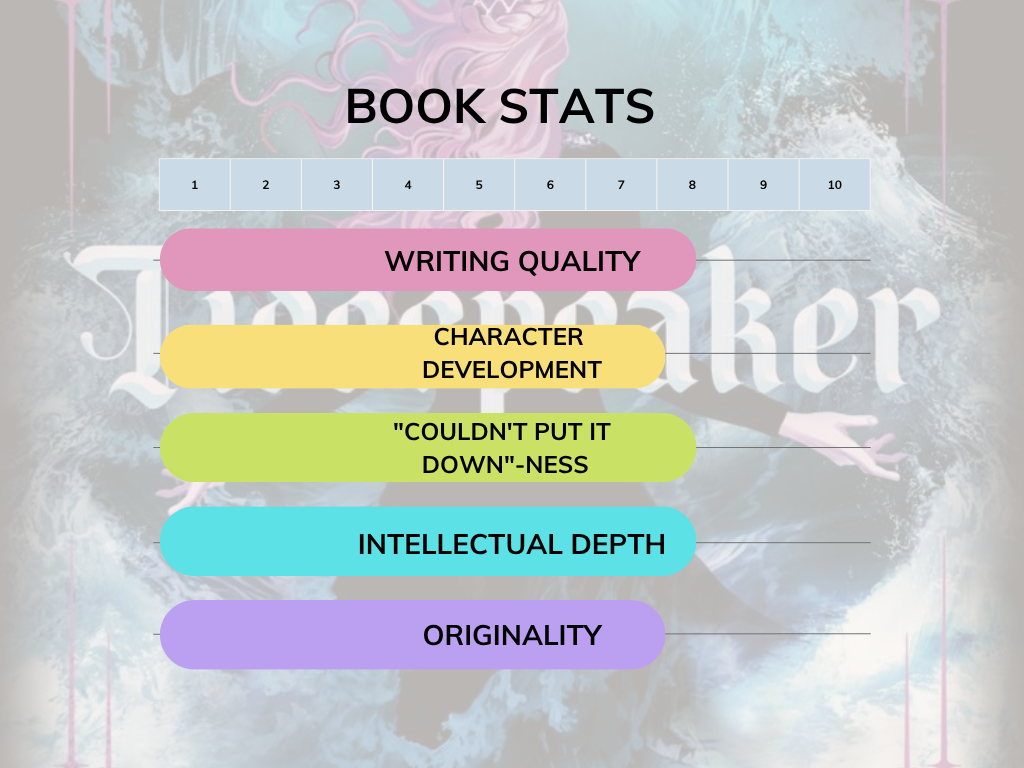
Tidespeaker presents an intriguing fantasy world filled with elemental magic, political tension, and themes of social inequality. While the romance subplot feels underdeveloped and somewhat misleading compared to its marketing, the story still offers strong worldbuilding and meaningful character growth. Readers who enjoy magic systems tied to political conflict may find plenty to appreciate, even if the emotional payoff doesn’t fully land.




Donate with Paypal
Help Cyn’s Workshop improve and grow with a one-time donation. Donations go towards equipment, writing suppliments and giveaways to the bookish community.
$1.00