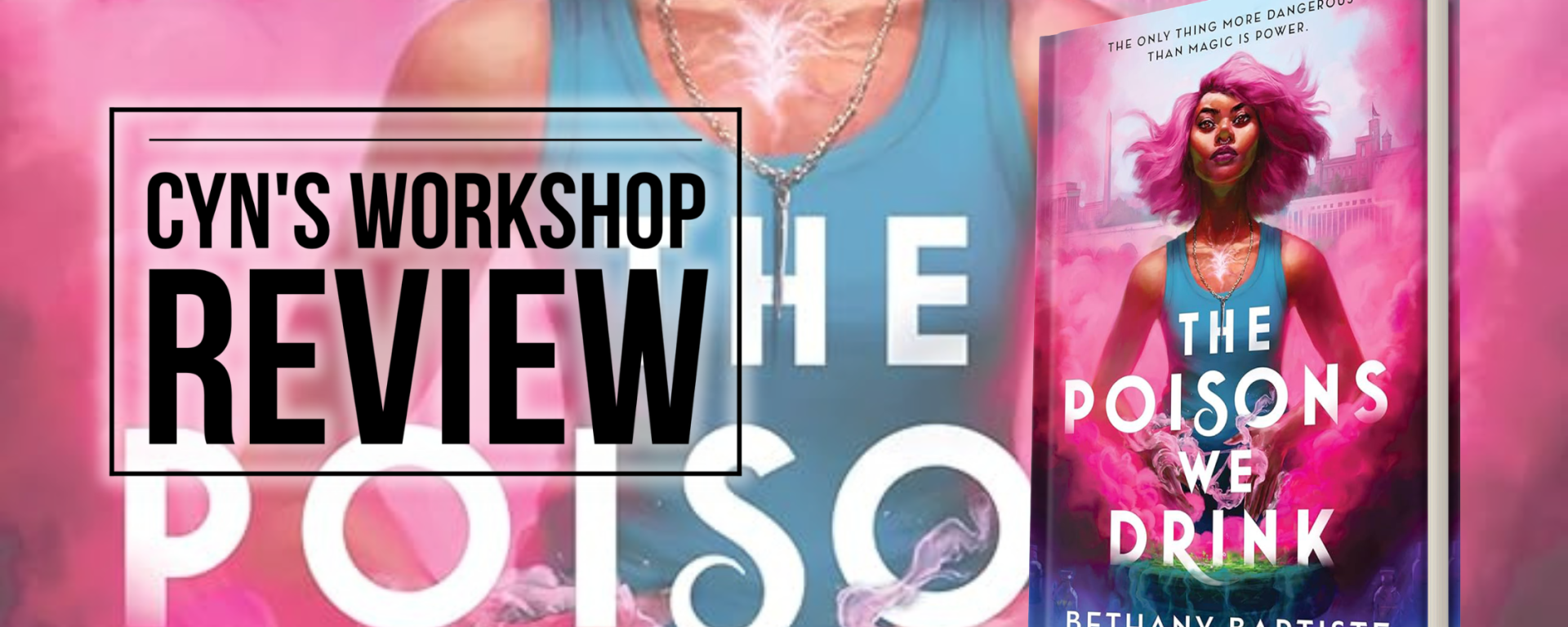
The Poisons We Drink delivers a thoughtful YA fantasy that tackles systemic racism, political corruption, and trauma through a compelling allegorical world, even if its protagonist can be difficult to connect with.
The Poisons We Drink by Bethany Baptiste was a complicated read for me. There were parts of this novel that I genuinely admired, especially the way it uses fantasy to explore systemic racism, government corruption, trauma, and the erosion of civil rights. At the same time, I struggled significantly with the protagonist, Venus, and that disconnect made the book much harder for me to fully enjoy.
This is one of those novels where I liked the ideas, respected what the story was trying to accomplish, and appreciated much of the plot—but I never fully connected to the person at the center of it.
Fantasy as a Tool for Social Commentary

One of the strongest aspects of The Poisons We Drink is how effectively it demonstrates that genre fiction can address real-world issues.
Fantasy is not somehow less meaningful simply because it contains magic or fictional systems. In fact, speculative fiction can sometimes make difficult conversations even more accessible by removing them from our immediate reality and allowing readers to examine familiar systems through a different lens.
That is exactly what Baptiste does here.
The story centers around Witchers, a marginalized group facing increasing restrictions, discrimination, and political persecution. Their rights are slowly being stripped away while institutions justify that treatment through fear, prejudice, and control.
The parallels to systemic racism are clear.
The characters are also members of other marginalized communities, including people of color and queer characters, which adds another layer to the novel’s exploration of identity and oppression.
I thought this aspect of the story was incredibly well done.
Systemic Racism and Government Corruption
The political elements of the novel were what kept me invested.
As the story unfolds, Venus begins uncovering corruption that extends beyond the Witcher community itself and reaches into the government. The deeper she investigates, the clearer it becomes that these systems of discrimination are not accidental.
They are intentional.
That distinction matters.
The novel explores how governments can normalize oppression by slowly limiting rights, manipulating public perception, and convincing people that discriminatory policies exist for safety or stability.
Through its fantasy framework, The Poisons We Drink creates a strong allegory for how institutional racism functions and how difficult it can be to challenge systems built specifically to preserve power.
Those themes gave the story far more weight than a straightforward fantasy plot.
Venus Was My Biggest Struggle
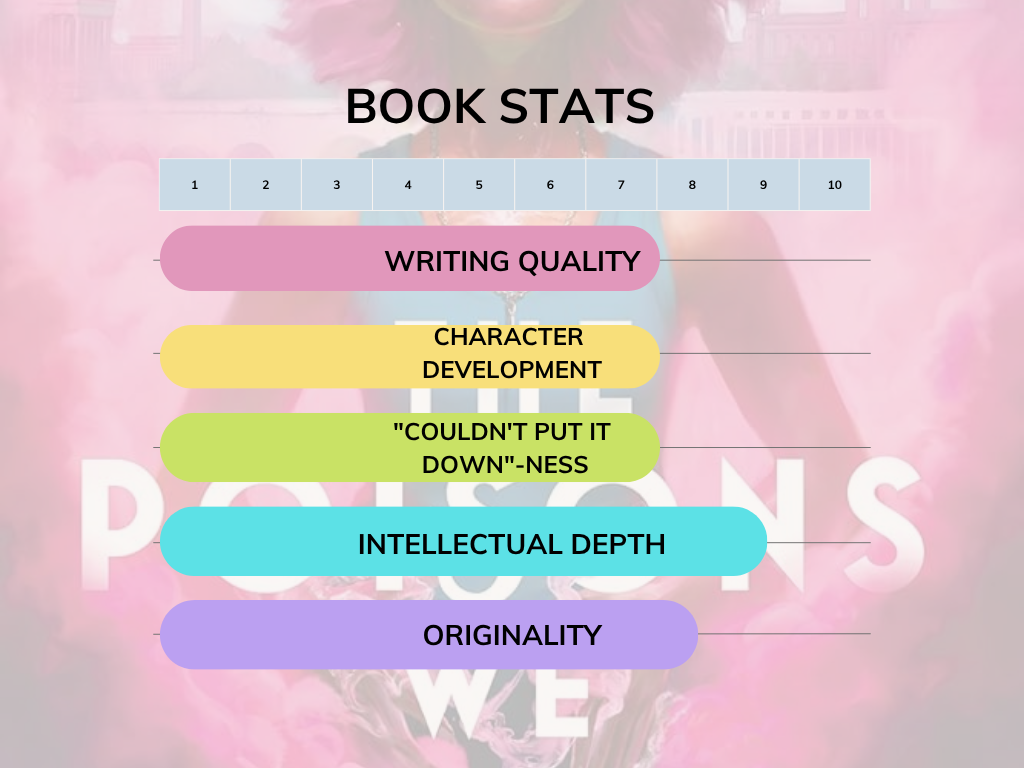
Unfortunately, Venus herself was the biggest obstacle between me and fully loving this book.
She is not an easy protagonist to like.
To be fair, she has been through an incredible amount of trauma. Her world has treated her harshly, and she has developed emotional defenses because of that.
Venus also has what the novel calls a Deviant—a magical personality that emerges following traumatic experiences. The concept immediately reminded me of the way dissociative identities can develop as a response to trauma, with another identity emerging to protect someone from circumstances they cannot emotionally process.
I found that concept fascinating.
However, understanding Venus’s trauma did not necessarily make her easier for me to connect with.
She can be incredibly stiff, abrupt, and emotionally closed off. The way she treats her friends and especially her sister often frustrated me. There were moments where I understood why she behaved the way she did, but I still did not particularly enjoy spending time inside her perspective.
Since Venus is the sole point-of-view character, that disconnect became difficult to overcome.
Trauma Doesn’t Always Equal Likability
I appreciate complicated protagonists.
Characters do not need to be nice, perfect, or universally likable for me to care about them. In fact, deeply flawed characters can often be the most interesting ones.
But they still need to create some kind of emotional connection.
With Venus, I struggled to find that connection.
Her trauma explains much of her behavior, but I wanted more vulnerability from her characterization. I wanted more moments where the emotional walls came down and readers could see the person underneath.
Instead, she remained emotionally distant for much of the novel.
That distance also made some of her relationships feel weaker than they probably should have.
Miscommunication and Withheld Secrets
Another element that frustrated me was how frequently Venus kept information from people who were supposed to be her allies.
The miscommunication trope is already one of my personal storytelling pet peeves, and this novel leans into it more than I would have liked.
I understood why Venus had trust issues.
I understood why she believed withholding information might protect herself or other people.
But after a while, those choices became frustrating because they repeatedly complicated situations that could have been resolved—or at least approached more effectively—with honesty.
For me, that made her characterization even harder to connect with.
Strong Pacing with a Few Rough Spots
Outside of my issues with Venus, I thought the overall pacing was fairly strong.
The mystery surrounding the Witcher community, the government, and the larger corruption steadily builds throughout the novel. The tension rises as Venus uncovers more information, and several scenes genuinely had me invested in what would happen next.
However, there were also moments where scenes continued slightly too long.
The tension would build beautifully, only for the scene to linger past its natural endpoint and lose some of that momentum.
Those pacing dips were not constant, but they were noticeable.
Again, I think my lack of connection to Venus contributed to that feeling. If I had been more emotionally invested in her, those slower moments might not have felt nearly as long.
The Witcher Interludes Add Depth
One element I really enjoyed was the inclusion of informational interludes detailing the history of Witchers within this world.
They function almost like encyclopedia or wiki entries, giving readers historical context without disrupting the main narrative.
I thought these sections were particularly effective because they expanded the worldbuilding while reinforcing the political themes of the novel.
Rather than feeling like exposition dumps, they added texture.
They also helped explain how Witchers came to occupy their current position within society and how discrimination against them became institutionalized over time.
A Satisfying Ending
Despite my frustrations with Venus throughout much of the book, I really enjoyed the ending.
Watching her finally take control of the situation and prove herself was incredibly satisfying.
That payoff gave her journey some of the character growth I had been waiting for, and it made the conclusion feel rewarding even though I had struggled with her for much of the novel.
I only wish I had felt that level of connection with her earlier.
Final Thoughts
The Poisons We Drink is an intelligent and socially relevant YA fantasy with a lot to say about systemic racism, government corruption, trauma, and identity.
Bethany Baptiste uses fantasy effectively to explore real-world systems of oppression without losing sight of the fictional world she has created. The Witcher allegory works particularly well, and the historical interludes add meaningful depth to the worldbuilding.
Unfortunately, Venus kept me from fully connecting with the story.
Her trauma makes her behavior understandable, but her emotional distance, abrasive personality, and reliance on withholding information made it difficult for me to become invested in her as a protagonist.
I liked the plot. I liked the themes. I liked the political intrigue.
I just didn’t particularly like Venus.
For that reason, this ultimately landed at a solid three stars for me.